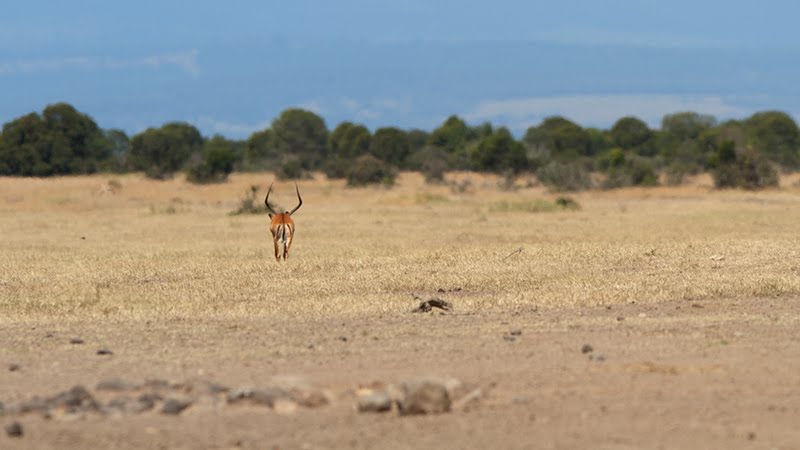
Sunday, September 19, 2010

Favorite Places: Tamarack Nature Center


This is the first in what promises to be a series of posts where I will share locations that have inspired me and my photography. I plan to pepper these stories and reflections of "Favorite Places" once a month throughout the year. 
Today, I'd like to introduce you to Tamarack Nature Center. Every nature photographer needs a place like Tamarack. Located less than fifteen miles from my home in Stillwater MN, I can role out of bed before sunrise, slam a cup of coffee and be at this sweet little spot before I am even awake. Just north of the Twin Cities, this 320 acre preserve lies in the heart of suburbia,... but you would never know it. Pulling into the parking lot, you can see the old oak forest in the distance. As you pass the interpretive/education center, you will be greeted by a small but biologically diverse prairie habitat. Bluestem and side-oat grasses are intermixed with wildflowers like lupine, milkweed, cone flower, bee balm and black-eyed susan. At the fringe of the prairie are tamarack trees with their delicate cones, and a few old and weathered jack pines. 

The prairie gives way to a wildlife viewing platform to the north and a lake to the south. Ringing the park is a boardwalk that includes miles of trails where you can wander through a cattail marsh, oak savanna, and tall-grass prairie. 
Tamarack is a creative outlet for me. Working full time as a teacher, I do not have the flexibility to jump on a plane, or take a road trip on a whim. Nonetheless, I feel the ever-present compulsion to take pictures, document moments, and tell a story.

Having this wild and diverse habitat so close to home has allowed me to experiment with my photography. While at Tamarack, I never feel as if I am missing a "once in a lifetime" shot, as a result, I am free to stretch and exercise my inner creativity. It is my belief that we all need our own little Tamarack... a place to wander, smell the earth, meditate, and live our passions.
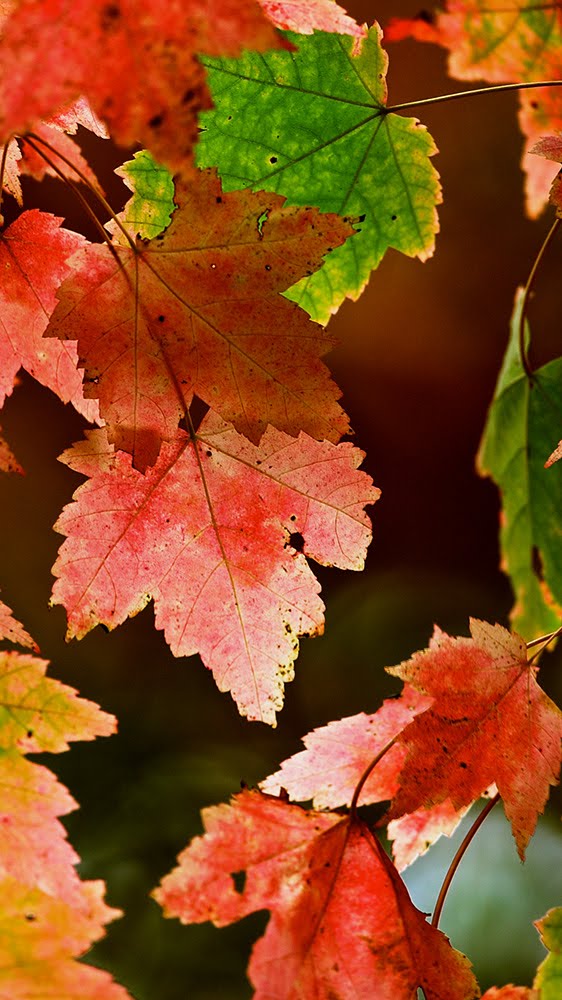
I will be doing a talk and slide presentation at Tamarack Nature Center on Thursday September 30, and will exhibit an retrospective of nearly ten years of photography at the preserve from late October through November. If you would like to visit Tamarack Nature Center, please follow this link for directions to the preserve.
©2000-2010 BTLeventhal.com / Bruce & Tamy Leventhal. All rights reserved. No image on this site may be used without permission 

Sunday, September 12, 2010

Kenya 2010: Lake Naivasha and Crescent Island

"I had a farm in Africa at the foot of the Ngong Hills..."
So goes the opening line from Karen Blixen's memoir about her life in Kenya.
Made famous by Meryl Streep in the award winning movie "Out of Africa," Streep's Danish accent lingers in my head and reminds me of the racism that colonized East Africans were forced to endure. While Karen Blixen, might have been one the the "good ones," most Kenyans suffered the loss of their land and their culture under European oppression.
On December 12th, 1964 the Republic of Kenya was proclaimed to be an independent nation free of British colonial rule, and Jomo Kenyatta became the first president of the republic. Nearly fifty years later 67% of the Kenyan population voted to ratify a new constitution that redefined the Executive, Legislative, and Judicial branches of the government. The colony that once was, is no more... but its legacy continues to impact the populace today.
So, where does photography intersect with this geopolitical discourse? 
The past most definitely influences the present, and the actions of today determine what happens in the future. Traveling across Kenya from the arid north to its southern border with Tanzania, the influence of colonial rule was ever-present. Plantations still dot fertile mountain slopes, and while some of these farms are now the property of indigenous Kenyan families, others remain in the hands of a people who visited and never left. In Tanzania, the lyrical tones and inflections of Swahili ripple through the air, while the "King's English" seems to prevail in Nairobi and across the distant Kenyan countryside. 


The past has influenced the present, but it is not all bad. The European sensibility that embraces a natural landscape, is now an important part of the Kenyan psyche and culture. The Kenyan people recognize the importance and value of their wild resources, and they work to actively protect the landscape and participate the ecotourism that visitors travel so far to enjoy. 


Located at an altitude of 1,884m is Lake Naivasha. This freshwater lake has a surface area of nearly 140km², and is an important aquatic ecosystem that supports a diverse array of avian and mammalian fauna. Over 400 species of birds have been reported in this Rift Valley Lake and it is a great place to enjoy a boat safari. Our captain piloted our questionably seaworthy skiff with ease as he maneuvered us near nests, fish eagles, and groups of hippopotami. Having the opportunity to see and photograph these unique species at eye level from the water was an unexpected treat.
Located at the southeast edge of Lake Naivasha is Crescent Island. More accurately described as a peninsula, Crescent Islands juts into the lake and offers photographers the opportunity to participate in a walking safari. This island is home to zebra, giraffe, bushbuck, impala, waterbuck, gnu and numerous other prey species. The island lacks predators, so it is easy to navigate within and among animals that are normally quite wary of us. As we walked in and among these exotic giants our guide explained that Meryl Streep and Robert Redford were here. You see, it turns out that Karen Blixen's life, made famous by the movie "Out of Africa," was filmed on Crescent Island. This little peninsula within a Rift Valley lake is now a game sanctuary, that serves to protect Kenya's wild heritage that its people fought to reclaim.
©2000-2010 BTLeventhal.com / Bruce & Tamy Leventhal. All rights reserved. No image on this site may be used without permission 

Wednesday, September 8, 2010

The Torrents of Gooseberry Falls

Traveling north on Hwy 35 out of Minneapolis - St. Paul, you can't help but notice the profound changes in the landscape. The brief Minnesota fall is ablaze with its red, orange and gold deciduous woods; it's a band of forests that extend south and west along the river valley. There is no monotony on this four-lane slab of asphalt. Technicolor trees entertain the eyes for miles on end. In the Midwest we bask in the cornucopia that is Fall. We embrace all of its beauty... we know that a stark cold winter approaches.  
The north road climbs the remnants of an ancient mountain chain, and our vehicle crests high above Duluth and its infamous Great Lake to the east. Sugar maples and oaks give way to birch, aspen, and pine; we are entering the southern edge of the boreal ecosystem. The valley and its great lake are reminders of glaciers that once were, forces of nature that shaped the landscape that now seduce us with its beauty.


Summer and Fall rains pool in rivers and valleys, the flood surges east towards the greatest of lakes. Tributaries and creeks merge, they cascade down the ancient Sawtooth Mountains. Water jumps, splashes and fills the air with a fine mist. This is Gooseberry Falls and it is a Minnesota icon.
©2000-2010 BTLeventhal.com / Bruce & Tamy Leventhal. All rights reserved. No image on this site may be used without permission

Friday, September 3, 2010

Kenya 2010: Seeing with Intuition


Whenever intuition intersects with cognition, my photographic productivity suffers. 
I am drawn towards nature because I feel it, think it, and understand it. The complexities inherent in the natural world are not complexities to me; they are models based on interactions that coincide with my world view. To me, the patterns I observe in nature make sense, are logical, and form the basis in which I understand the world. To me, nature is intuitive. Because I have both an emotional and intellectual connection with the natural world, I see patterns and light in the environment in ways that I do not see anywhere else. This is why I am drawn to nature photography.


In contrast, when I over think the photographic process, I lose my ability to see. 
Photographers often claim to pre-visualize an image prior to shooting, and this is a skill on which I depend. However, this is not a cognitive exercise, it is intuitive... I am there, I feel my surrounding, and I know my goal. When I leave my comfort zone, my reflexive ability to see and to be in the moment dissipates. On these occasions my photography must evolve or it suffers. 
Here in lies the great challenge. I love to travel, explore our world, and interact with an environment that defines "the place." However, as soon as that place is defined by its human inhabitants, I lose my vision. It's not an irrational fear of humans, it's my discomfort with the voyeur in us all.
Voyeur... watcher... describer... interpreter... 
I do not like to be watched, nor do I want others to define me, yet this is what we do when we travel. We see their lives in their place and try to make sense of how they live. And I, with my camera, am the voyeur... the watcher... the describer... the interpreter. 
To some, the ability to mingle among our own is a source of comfort. These gifted photographers can wander through a crowd, relax their subjects and elicit a smile or capture that magic moment. This is their comfort zone, and when they are in the zone,... their photography is not cognitive... it is intuitive.
Today's images are of the Samburu people, and they are the indigenous inhabitants of Northern Kenya. The Samburu are a lesser known ethnic group whose connections point back to the Masai. Like their relatives to the south, the Samburu are semi-nomadic shepherds. Cattle is their currency, their measure of wealth, and their livelihood. These proud warriors wander among the lions, live off the land, and survive unimaginable hardships. The day we visited these people we learned about the drought, the collapse of their economy, and the challenges of their lives. 
I could not escape that feeling that haunts me when I travel among other humans... How can they be so happy when they have so little? I try not to be the voyeur, the watcher, the interpreter... I try to live in the moment, but I can't escape from my thoughts... they have so little and I have so much. I was not in the moment, I was thinking too much. In contrast, Tamy was there... she was in that intuitive place; you can see it in the girl's eyes above and the smirk below. My images are compelling, but I do not have what it takes to produce the image you see below. I am lucky to have a partner who can mingle among our own... I think I'll stick with nature.
©2000-2010 BTLeventhal.com / Bruce & Tamy Leventhal. All rights reserved. No image on this site may be used without permission
Saturday, August 28, 2010

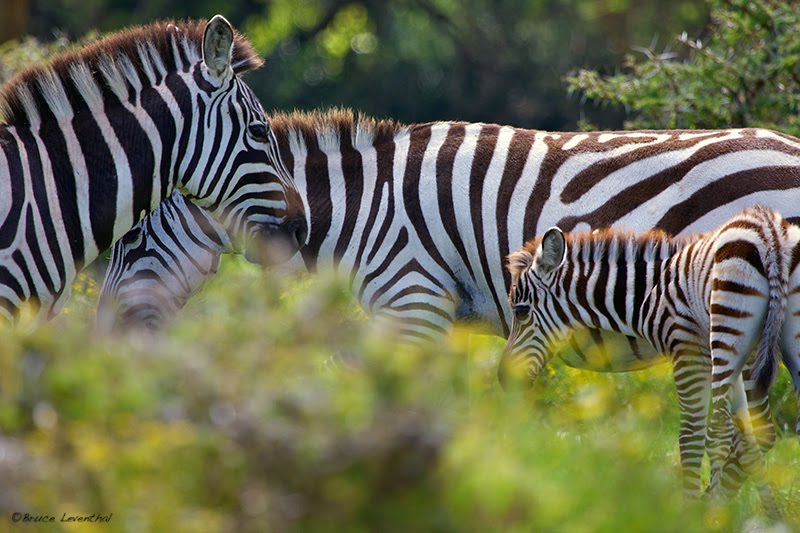
Kenya 2010: Lake Nakuru & My Battle with Expectation


It took three days before I realized that I had been in a fight, it was an ongoing battle that was causing a form of paralysis. I was suffering from a self-induced creative block brought on by expectation. The words African safari conjure thoughts of adventure, the exotic and danger. These thoughts and preconceptions cloud the reality that is. So rather than immersing myself in the now, I was looking to meet the needs of my expectation. As a naturalist, photographer and artist with a desire to fill my empty bucket with new and exciting images, there was only one possible outcome... an empty bucket!


It was during our second day at Samburu National Reserve that I discovered the unintended war I was waging against myself. Now that I understood the problem, I could begin the search for a solution that would liberate me from the shackles that restricted my vision.  
To break the viscous cycle, I had to leave my recollections of old National Geographic's, Discovery Channel footage and prior travels in my mental hard drive. In its place, I exposed open memory slots where I could record new mental and physical images... You can only image the relief I felt once I began to view Kenya through a creative eye.
It is quite cathartic whenever you discover the source of a creative block. Unfortunately, this is not the first time I have had to experience this catharsis. Furthermore, I would love to claim that this was my first battle with expectation... sadly, this is not the case. 


There have always been photographers, musicians, writers, and scientists who did it first. The task facing we  plebeians of the day, is to make the experience our own. Make it different, do it better, and innovate beyond what came before.  


Leave the baggage in the closet... this is the phrase I whispered to my brain. The bags of my past and the work of my predecessors are too large a burden to carry, they are the wall that caused my paralysis.  While it is a bit cliche, in order to suppress your expectations... carpe diem - live the moment - own the moment - be in the moment. If you can let go of your expectations, you will unleash your creative potential and be prepared to embrace the unexpected. 


All of the images presented are from Lake Nakuru National Park.
Lake Nakuru is located in the rift valley in Central Kenya. The lake is one of Africa's soda lakes, and is known for a large migrating population of flamingos. Lake Nakuru National Park is home to a wide diversity of African birds and mammals. Known as a hotspot for leopards, it is also home to introduced populations of black and white rhinoceros. 
©2000-2010 BTLeventhal.com / Bruce & Tamy Leventhal. All rights reserved. No image on this site may be used without permission

Thursday, August 26, 2010

Northern Exposure

The Dock
Clearwater Lake - Ontario - Canada
Canon 5D & 17-40L @ 17mm


Tamy and I just returned from a 3 night respite at one of our favorite little spots on the planet. It is a quiet little lake just north of Minnesota in Ontario, Canada. Our good friends Anne and Gary are kind enough to invite us each year to shed the baggage of the working world, civilization, and life's stress as we enjoy their  company and serene view. You can't drive there and the walk might wear out your boots, but there is one sure way to visit the north end of Clearwater Lake. Twenty minutes by boat, crossing open water dotted by granitic and gneiss islands, is a little cabin. This is the place to get off the grid, kick up your feet, and stare at the beauty of nature.
Dreaming of Islands
Clearwater Lake, Ontario - Canada
Canon 1Ds mkII & 70-200L @ 70mm


It's a challenge for me, as I have a restless nature and I am thankful for Anne and Gary who remind me that I'm a bit too plugged in and need to find a way to let it all go. You'd think that a nature guy like me could easily leave his computer behind and forego the digital world, but these electronic machines have invaded every corner of our lives and now seem to be tools on which life depends. I didn't grow up with a computer, I took a type-writer to college, and didn't buy a cell phone until 1997. I was a researcher on a little island in Alaska the late 80's, and lived on a research vessel on the Bering Sea. Once upon a time, I'd hike for days in the woods and nobody would know where I was. Yet here I sit, it's 2010, and technology has invade my life, my brain, and my psyche. 
Moonlit Chair
Clearwater Lake, Ontario - Canada
Canon 7D & 300 f2.8IS
This is why Clearwater Lake is so very dear to me. There is no power, they use propane to light their rooms, and you don't hear a whoosh after you poop in the outhouse. Life at the lake is about photography in pre-dawn light, reading until it's time to a take a nap, and taking a refreshing dip in the cold clean water. When I'm not in the field chasing the dramatic light, or sitting on the deck reading a good book, I'm engaged in that most gratifying experience... feeding my face. There are no bad meals in north woods, no restless evenings, and no excuse for doing nothing. Everyone needs to find a Clearwater Lake once in a while, kick off their shoes and unplug from the modern world!
©2000-2010 BTLeventhal.com / Bruce & Tamy Leventhal. All rights reserved. No image on this site may be used without permission

Friday, August 20, 2010

Kenya 2010: 21,000 and Falling!

RhinoScape
Lake Nakuru, Kenya
Canon 7D & 300 f2.8IS

At about 8:30 this evening I was editing some work from our recent trip to Kenya and plotting a pathway into today's blog. My first inclination was to discuss photography with a focus on animal landscapes. We had spent a day touring Lake Nakuru National Park and were fortunate to see a herd of five white rhinoceros in some really sweet light... this unique encounter was going to be the seed for my discussion.
Shortly after processing the lead image (see top), I was rudely interrupted by a solicitor.... I knew it was a solicitor because my caller ID said, Pittsburgh and..., I don't know anyone from Pittsburgh. Anyway I decided to answer the phone figuring that I'd just hang up when I got that pregnant pause... you all know the pause, it's the moment between the pick up and the butchering of my name.  Well, you can imagine my surprise when the young lady who called my home said, "Hello, I'm calling from the World Wildlife Fund, and I want you to know that Rhinoceros populations are on a steep decline."


A steep decline!... 
Not only do I know about this crisis, I teach it. I try to help my students understand the problems associated with extinction and loss of biodiversity every year.
In my classes, I often discuss how species become threatened or endangered, due to the unending human expansion and perpetuation of irrational behaviors in the name of tradition and ideology. Needless to say, I was quite receptive to my solicitor. I shared that she could not have picked a better moment to call my home, and that I would gladly donate to a program that was funding the transfer of black and white rhinos to Ol Pejeta Conservancy... it was a very weak and humbling moment for me.  
So, rather than discussing the photographic process, I thought that I would share some general information about this very unique and ancient group of mammals.
- Rhinoceros belong to the order perissodactyla, the group known as odd toed ungulates. Perrisodactyla also includes the equines (horse, zebra, donkey), and tapirs.
- Rhinoceros-like mammals have been roaming the planet for over 30 million years and their ancestral forms had a larger range than all of the species currently here today. The distribution of prehistoric rhinos once included Europe, large areas of Asia and North America.
- There are only five living species of rhinoceros today, all of which are threatened by poaching and considered to be endangered. In general, rhinoceros numbers are so low that they can only be found in national parks, conservancies, and protected forests.
- There are less than 21,000 individual rhinoceros living in parks and reserves, and their numbers are falling.

- According to the World Wildlife Fund, there are fewer than 25 individual Sumatran Rhinoceros.
- The Javan Rhinoceros survives in isolated pockets of Indonesia and Vietnam. Poaching and deforestation are decimating their population. The current census predicts that there are fewer than 75 Javan Rhinos left in the wild.
- The Indian Rhinoceros is also known as the "Great One Horned Rhinoceros (Rhinoceros unicornis)." While its range once included Pakistan, Burma, and China, it is now restricted to the mountain slopes of Nepal and protected regions of India.
- The Black Rhinoceros is a solitary and often cantankerous browser. They have a semi-prehensile lip that is used to gently pluck leaves from bushes and shrubs. This is one of two species of rhinoceros that can be found in Africa. The image pictured above and below are the same individual. He is a blind rhino that lives in Ol Pejeta Conservancy, and part of their public outreach program.
- The white rhinoceros is subdivided into two sub-species. The southern white rhino is on a road to recovery with a population that exceeds 14,000 individuals. The largest population can be found in South Africa. In contrast, there are as few as eight northern white rhinoceros on the planet today. The largest sub-population lived in a zoo in the Czech Republic. In 2009 the four Czech white rhinos were translocated to Ol Pejeta, where they hope to rebuild the population. Unlike the black rhinoceros, white rhinoceros are gregarious grazers. They use their wide lip to mow down the savanna grasses.

What Can You Do?
1. Tell the people you know that rhinoceros populations on this planet are threatened with extinction. 
2. Write your government and tell them that you care and that you want them to support the rules and treaties defined by CITES (Convention on International Trade in Endangered Species).
3. Make a donation to the World Wildlife Fund... we did!
4. Make a donation to Ol Pejeta Conservancy... we did! Ol Pejeta is home to 86 black rhinoceros, 10 southern white rhinoceros, and 4 (of 8 on the planet!) northern white rhinoceros. These animals roam throughout the 90,000 acres of protected Kenyan forests, mountains, and grasslands.
5. Fight for biodiversity! Every species is the product of evolution by natural selection and every species on this planet contributes to the complexity of the world in which YOU live!
©2000-2010 BTLeventhal.com / Bruce & Tamy Leventhal. All rights reserved. No image on this site may be used without permission

    Wednesday, August 18, 2010

    Kenya 2010: Published in Strange Places


    Prudent Advice
    Ok, well this really isn't a post about our summer safari to Kenya, but it is tangentially related. Shortly after the birth of my adorably cute niece, my sister Jaime began to author some "lessons of questionable importance" that she hoped to share with her daughter. It was a frenzied creative process where she would write quips about life, living, future, family and fun. However, this is not a list of trite thoughts that we have all heard time and again. Rather, this is a collection of musings defined by honest insight, tough love, realism and, yes, dreams. This little personal project blossomed into a blog that spidered across the internet. The blog became the seed for the book, "Prudent Advice," and a DIY website for parents and kids called "PrudentBaby.com."
    Prudent Baby.com
    It's really funny how one little idea intended to enrich a mother-daughter relationship blossomed into something so rich and engaging. 


    So, where do Tamy and I fit into this elaborate and seemingly unrelated web about parenting? 
    Knowing how concerned Tamy and I were about environmental, social and cultural issues, Jaime asked if we had any thoughts or images that we would like to share with her daughter. While I can be quite verbose, the thoughts did not flow, but the images did. We sent a few pictures from our travels, and Jaime seemed to connect with this group of Masai ladies adorned in their traditional clothes and jewelry. 


    Pensive Masai Warrior
    Ngorongoro Crater, Tanzania
    Canon 1DmkII & 300mm f2.8IS
    We are quite pleased with the words about travel (Advice 415) that support are image and love the way the work is displayed in the book. 


    Prudent Advice is now available for pre-order on Amazon.com, and is the ideal gift for new mothers, baby showers, or someone looking for way to tell a daughter that she is loved. 


    One final point... and a shameless plug for the The Way We See It... please visit our link to prudentbaby.com where we offered 25 Tips for Taking Great Photographs... you just might get a few new ideas!


    ©2000-2010 BTLeventhal.com / Bruce & Tamy Leventhal. All rights reserved. No image on this site may be used without permission

    Prudent Advice, © 2010, Jaime Morrison Curtis
    Prudent Baby, © 2010, Property of Jacinda and Jaime

    Sunday, August 15, 2010

    Kenya 2010: The Watering Hole


    Location: Serena Sweetwater Tented Camp - Ol Pejeta Wildlife Conservancy


    The tension was palpable. The herd ran in, thrashed about, drank, and dashed away into the landscape. Seasonal droughts produce micro-habitats where scarce amounts of food and water can be found. As the dry season progresses the flora is over-grazed and ephemeral wetlands evaporate into mud holes. The large groups of megafauna are forced into river valleys, springs and semi-permanent wetlands. Individual animals fight for position within the herd... nobody wants to be left on the margin. While water sustains life, its absence restricts diversity and survival. These scarce resources are the lifeblood of the savanna they are a place to live and a place to die. 


    We watched from the edges of a pond as one herd after another ran into the wetland. Warthogs intimidate as they rumble into the water, snort and wallow about. Known for a grumpy disposition, the hogs displace the quiet of one herd as they bully about. They are nothing short of obnoxious as they vocalize with bombastic exuberance. Tails go up when it's time to go, and the hogs leave as quickly as they arrived.
    If you are looking for the drama of Africa, find yourself a quiet little pond surrounded by a naked landscape. Pull up a chair, peer through the camera and wait. The action is just around the corner.


    ©2000-2010 BTLeventhal.com / Bruce & Tamy Leventhal. All rights reserved. No image on this site may be used without permission

    Wednesday, August 11, 2010

    Kenya 2010: We are the Ape Family


    The physical similarities are unmistakeable. If you accept the premise that lions and tigers are cats or wolves and foxes are dogs, then it is no leap of faith to claim that chimpanzees and humans are apes... we just happen to be more naked than them.

    While our posture, mode of communication, and diet may differ, our physical anatomy and biochemistry are remarkably similar. A comparison of genetic similarities between our two species suggest that there is no living organism more like a human than a chimpanzee or bonobo. In fact, our genetic code, which consists of over 3.2 billion base pairs (3,200,000,000 bp), has a 98.6% overlap with that of the chimpanzee. On average, 3,155,200,000 bp of our DNA is the same as the DNA found in the common chimpanzee, Pan troglodytes.  Either we are both apes or we are both humans... I’ll let you decide where you’d like to draw the line.
    I begin here with a biology lesson to underscore the purpose of today’s thoughts. Chimpanzees are routinely hunted for bush meat, medical experiments, circuses, and pets. This cousin of ours is often extracted from the environment in which it evolved and is forced to live under inhumane conditions across the planet. Native to rainforests and savannas of East and West Central Africa, this closest living connection to our own evolutionary heritage lives under the threat of an ever-expanding human population. 

    In 1993 the Kenya Wildife Service (KWS) and the Jane Goodall Institute negotiated an agreement with the Ol Pejeta Conservancy to establish a 250 acre chimpanzee sanctuary for orphaned and abused chimpanzees. The sanctuary was first established to provide a protectorate for animals trapped within the civil conflict that was occurring in Bujumburu, Burundi.

    Today, the conservancy is home to two groups of chimpanzees separated by the Ewaso Nyiro River. These rehabilitated chimps live much like wild troops in their own native habitat. Unlike truly wild groups, Sweetwater’s chimps are offered food provisions, vaccines and routine medical care. To control the inevitable population growth, females are fed contraceptives to reduce fertility. While it is possible to see the chimpanzees during brief periods of the day, they spend most of their time in the woods and tree canopy. Living as far from human eyes as possible, these chimpanzees appear to view us with suspicion. They are rescued apes, they wear the scars of their captivity, and they appear to see their captors when they look at us.

    It costs between $4000 and $6000 to support a chimpanzee in Sweetwater for one year. This conservancy survives as a result of government aid, the Jane Goodall Institute, and other non-profits. You can help support a chimpanzee at Sweetwater by “adopting a cousin”... we did. The Chimpanzee pictured on the right is Naika. Naika was abandoned by a circus, but now lives as the 3rd ranking female in her group.
    ©2000-2010 BTLeventhal.com / Bruce & Tamy Leventhal. All rights reserved. No image on this site may be used without permission