Showing posts with label Kenya. Show all posts

Saturday, November 17, 2012

An African Retrospective II

Bull Elephant (Loxodonta africana) - Serengeti, Tanzania
Canon 1Dmk II + Canon 300mm f2.8L IS
One more look back... and now it's time to move on. 
Black Rhinoceros (Diceros bicornis) - Ngorongoro Crater, Tanzania
Canon 1Dmk II + Canon 300mm f2.8L IS
Three Warts (Phacochoerus africanus) - Masai Mara, Kenya
Canon 40D + Canon 100-400 f4.5-5.6L IS
©2000-2012 BTLeventhal.com / Bruce & Tamy Leventhal. All rights reserved. No image on this site may be used without permission.


Thursday, December 29, 2011

Tip #33: Be a Documentary Artist


The Watering Hole - Nairobi, Kenya
Canon 5D + Canon 70-200L f4.0

It is all too easy to claim that photography is an art for those who lack the skills to be “real” artists. Millions of images captured each day on portable handheld computers are posted to photostreams across the globe. The purist of journalistic motifs, the photograph conveys the here and now, and tells a story about the moment captured. Yet, the photojournalist - the point-and-shooter - is the decider. The choice of what to extract and the noise to omit is at the heart of documentary photography. We image makers are documentary artists. The pre-capture decisions we make about the lens, camera, shutter speed, and aperture determine our point of view, point of focus and interpretation of time. Often described as the art of exclusion, the documentary artists will become invisible as they survey the landscape, make the key decisions and convey the essence of the story.
Pacifier - Nairobi, Kenya
Canon 40D + Canon 100-400L IS f4.5-5.6


Note: The Images from Tip #33 were originally used in a prior blog post from June, 2010. Follow the link to read the original entry titled "An Elephant Story." 
Foster Dad - Nairobi, Kenya
Canon 5D + Canon 70-200L f4.0
©2000-2012 BTLeventhal.com / Bruce & Tamy Leventhal. All rights reserved. No image on this site may be used without permission.

Monday, September 5, 2011

Tomorrow...

Road to the Mara - Masai Mara Reserve, Kenya
Canon 7D + Canon 300mm f2.8L IS

Tomorrow marks the first day of the 2011-2012 school year. The two weeks spent prepping lessons and cleaning labs are now as ephemeral as my memories of Costa Rica, Wyoming, and Northern Minnesota. With only a few hours separating summer from fall, I sincerely hope that my students are as excited about their return to academia as am I. Nervous anticipation gnaws at me as I try to relax on this final evening. Tomorrow, "Summer Bruce" will fade into the past as Mr. Lev takes the stage. It's Labor Day in the United States... summer is all but over. 
©2000-2011 BTLeventhal.com / Bruce & Tamy Leventhal. All rights reserved. No image on this site may be used without permission.

Monday, August 29, 2011

Juxtaposition (II)

The Future of Nairobi
Canon 40D + 100mm f2.8 USM
Both "Tension" and "Juxtaposition (1)" illustrate how an image series can be used to convey a story or theme. To me, "Tension" is a drama. The interaction of predator and prey are juxtaposed with the unpredictability of nature. Weather defines the ecosystem with its predictable patterns, yet it can be a foil to the animals that must endure it.


"Juxtaposition (1)" plays with both language and imagery. Here, the first three images are about a day in the life of a tropical species. This icon of Costa Rica always brings a smile to my face and those who have a chance to see them. Similarly, the elk portrayed are whimsical to me. The young bull filled with forage contrasts with the unique form of mature hind quarters. From my perspective, this juxtaposition is just funny.


Today, I offer a single image for Juxtaposition number 2. I will let you draw your own conclusions about how juxtaposition defines this story. 
©2000-2011 BTLeventhal.com / Bruce & Tamy Leventhal. All rights reserved. No image on this site may be used without permission.

Saturday, April 23, 2011

Kenya 2010 The Last Stand: New Book @ Blurb.com


Wildlife and nature photographs have become ubiquitous as the world embraces the digital revolution. There are so many beautiful images visible today that it is challenging, if not impossible, to produce any one picture that is truly unique or displays a level of excellence that separates itself from the work of others.


Rather than showcasing a series of bests that competes with the bests found throughout the web, this book seeks to tell a story with its words and images.
Our story is a story about place, conservation and process. "The Last Stand" is a compilation of blog posts I authored following our second trip to Africa. This book is a photo blog from a Kenyan Safari written from the perspective of an evolutionary biologist, teacher, conservationist and photographer.
We hope that our images and words inspire the adventurer in us all and the desire to protect our fragile natural resources.
©2000-2011 BTLeventhal.com / Bruce & Tamy Leventhal. All rights reserved. No image on this site may be used without permission

Saturday, December 25, 2010

Kenya 2010: Final Thoughts

Photography is much more than a record of some fleeting moment in time. The images we produce are a reflection of our experiences and lives. The well known author and travel photographer Rick Sammon, claims... "the camera looks both ways." In short, the final image is more than reflected light striking a sensor or piece of film, it is an expression of the artist, photographer, and seer. It is a purposeful interpretation of the moment.
While the tools required to produce todays' digital images are more sophisticated than the light-tight boxes that once clung to sheets of film, it is the intent of the image-maker that continues to define the final photograph. The modern camera can suggest an exposure, composition, and final processing, but the photographer still gets to choose the moment... the perspective... the time in which the shutter is released.
All of this modern technology simplifies and complicates the photo-experience. The dichotomy can confound the novice and experienced shooter, and enable a paralysis that blocks creativity. While modern cameras are more capable than ever, these capabilities can obstruct the seer from seeing. When the tools cloud our vision and stifle our potential, we must seek a new balance... we must learn to manipulate the tools rather than allowing the tools to manipulate us. 


Immerse yourself in your image making experience; be the vision maker. 
Travel with your gear, take a photo walk, and carry the camera. Use your tools to imprint your mark on the fleeting event and seek to do more than document the occasion. Our time in Kenya was about being there... living the moment... telling a story... sharing a vision.
©2000-2010 BTLeventhal.com / Bruce & Tamy Leventhal. All rights reserved. No image on this site may be used without permission 

Monday, December 6, 2010

Kenya 2010: Taking in the Long View


Safari is to adrenaline as waterfall is to tranquility... 
The rush of being face to face with the giants that inhabit the African savanna is a challenge for me to articulate. While our images often convey the majesty of these animals, they can lack my emotive response to the experience. The same can be said for the vastness of the African wilderness. 
A wildlife safari is the antithesis of a landscape expedition. Participating in big game safaris limits mobility, perspective, and point of view. Restricted to a vehicle and roads that cut through vast wilderness, this is no place for a tripod carrying photographer. With predators looking for easy prey, the soft flesh of a plump human might be an irresistible hors d'oeuvres for a hyena lurking in the bush. As a result, our African landscapes are often feeble attempts to document a sense of place. They, sadly, are made as an afterthought, a brief opportunistic moment, and during the waning seconds before meals.
After leaving Africa for the second time, I could not help but think about the missed opportunities. "What about the landscapes"... another error in judgement... another time?
I love landscape photography... 
In fact, I like to think that our photography is more about the place than about the animals who live there. It's the ecosystem that motivates my own vision. I strive to illustrate the tension between flora, fauna, and geography in an attempt to portray the conflict and harmony inherent in every living landscape. The way I see it, life exists on the edge defined by adaptation, change, and unpredictability; it is in the greater landscape that we can all peer into this reality of a vibrant and diverse natural world.
©2000-2010 BTLeventhal.com / Bruce & Tamy Leventhal. All rights reserved. No image on this site may be used without permission

Thursday, November 25, 2010

Kenya 2010: Missing Africa


The Patagonia expedition weight thermals clung tightly to my frame as I braced for the biting cold. It's 7 degrees fahrenheit and the north wind ushered the frigid air through my layered attire. This is Minnesota, it's Thanksgiving Day, and I'm on a hike. My Sorrel bound feet blazed a trail as I crunched through the crusty mix of ice and snow that fell the night before. I'm seeking a winter landscape, and I'm thinking about Africa. 
The cold and lonely hike offers me the opportunity to reflect on my summer excursion... We were three on a Kenyan safari... Tamy, my mother and I. It was my opportunity to share my passion for nature, photography and travel... it was an opportunity of a lifetime.  

You never know what to expect when you travel abroad. Research helps you predict potential pitfalls and opportunities, but research cannot prepare you for the unexpected. On this trip, my fears were not about the travel experience... I pre-arranged all transports, lodging, and safaris; I knew that our in-country experience would meet expectation. We were in Africa... We were on Safari... Kenya would not disappoint!
Tamy and I travel abroad at least once a year, and rely on these opportunities to add to our vast library of images. International excursions provide a creative and intellectual boost to my psyche, it is the DNA from which I write, teach, and publish. This type of travel photography compliments our efforts home, and fulfills my desire to explore our natural world. We have been travel companions since the late 80's, and have always embraced the intensity of a rich travel/photographic experience. Love of travel and adventure united us in the beginning and continues to be a theme for our lives today. So, if I had any trepidations about my Kenyan Safari, they were about a new unknown. How would the addition of a third travel companion... my mother,  influence our travel experience and our productivity?
Ten days in Africa can be a grind for anyone. A safari vacation is not as self-indulgent as it sounds. The distances between refuges are large, the roads are rough, and the days can be long. Having traveled through Tanzania in 2008, Tamy and I knew what to expect. We prepped my mother for the experience, and hoped for the best. 
I feared that our excitement for Africa was masking the reality that I knew, but I hoped that the magic of nature would negate the inconveniences of adventure travel. Once we arrived in Nairobi and made that first long journey to Samburu Reserve, I knew that we were in for some fun. My mother embraced the experience in a way that I could have never anticipated. She was enthralled by the people, the landscape and the wildlife. The inner child that possesses me while on the road or with a camera, possessed her. My mother was one of us... not a photographer, not a traveler, not a tourist... she was a student. The intimacy of an intense cultural and environmental travel experience fostered the learner in us all. These are the experiences that enrich our minds and our hearts. 
Today is a cold Thanksgiving Day in Minnesota. I am thinking of Africa, pondering my next adventure and I am thankful to have had the opportunity to share my passions.
Image #1: Cheetah. Masai Mara Game Reserve
Image #2: Olive Baboon. Lake Nakuru National Park
Image #3: Elephant Babies. Samburu National Reserve
Image #4: Young White Rhinoceros with Mother. Lake Nakuru National park
Image #5: Lioness. Masai Mara Game Reserve
Image #6: Black and White Colobus Monkey. Lake Naivasha National Park
Image #7: Reticulated Giraffe. Samburu National Reserve
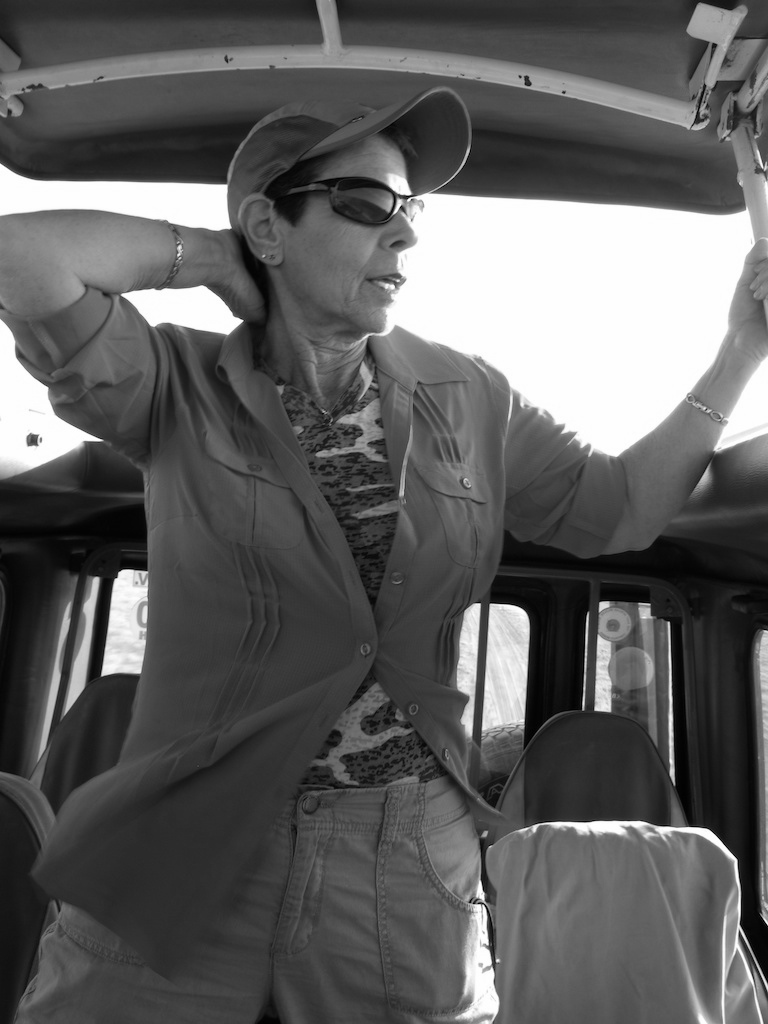
Image #8: My Mother... an all around good sport! 
©2000-2010 BTLeventhal.com / Bruce & Tamy Leventhal. All rights reserved. No image on this site may be used without permission

Friday, November 12, 2010

Kenya 2010: Midday Light


As the saying goes... "If you can't beat 'em,... join 'em!"
You're on the trip of a lifetime, living in the moment... but the light is not your friend. What to do?
It would be all too easy to put the camera down, get discouraged, and lose that photoMoJo. Alternatively, you could throw caution to the wind and turn your bad light into an opportunity to experiment, learn, and get creative. 
Harsh midday sun creates deep shadows, blown highlights, and unflattering colors. These unmanageable conditions make for great stories about the one that got away or the "impossible" conditions of the day. 
Never say die... work that bad light! 
Place your subject between you and the sun, stay low, and shoot for the backlight. Streams of bright sunlight can produce glowing highlights around ears, fur, or leaves. These "high-key" images are often the first to be tossed, but will occasionally make that list of cherished and interesting keepers. Don't fight the deep shadows and black blacks... leverage that lousy light and convert your raw images to black and white. Those trashy shadows now make for an interesting contrast to the bright whites. These shadows are now your friend as they make an average image into an abstract that compels your viewer to study the form and pattern.
Don't put that camera away... use that lousy light, think different, and shoot - shoot - shoot... you just might be pleasantly surprised.
©2000-2010 BTLeventhal.com / Bruce & Tamy Leventhal. All rights reserved. No image on this site may be used without permission

Monday, November 1, 2010

Kenya 2010: The Mara in Review (III)

Predators abound across the African Savanna.... always on the lookout for a place to hide, something to eat, and easy prey. With their keen eyes, large ears, and ultra-sensitive olfactory organs, predators are finely tuned to seek out the injured and feeble.
This morning's quick post is homage to the evolutionary process that has so carefully crafted the anatomy  and physiology of the carnivore. Be it gradual or punctuated, natural selection facilitates the retention of only the most adaptive characteristics while enabling the loss of traits that fail to perpetuate the species.
Graceful and lean, the cheetah is an ancient member of the family Felidae. Known for speed and maneuverability, she and her cubs scout the Mara in search of the weak and vulnerable. 
The Banded-mongoose belongs to the family Herpestidae. Thin and wiry like a mink, this predator takes on rodents, insects and serpents. Working among the collective, the mongoose is a fierce enemy of the cobra. 
The last image is of a Black-backed Jackal. Lurking among the tall grasses, these members of the family Canidae, seek out the dead and dying. They steal bits of food from abandoned carrion and hunt in the secrecy of night.
Here's to the predator.... crafty and lean... like all of Africa's wildlife, living on the edge.

©2000-2010 BTLeventhal.com / Bruce & Tamy Leventhal. All rights reserved. No image on this site may be used without permission

Tuesday, October 26, 2010

Kenya 2010: The Mara in Review (II)


Having spent six days on the Serengeti in 2008, I was quite excited about our travels to Kenya and the infamous Masai Mara National Reserve. While "The Mara" is relatively small when compared to the Serengeti, the diminutive size sports a densely packed diversity of life that is unparalleled.   
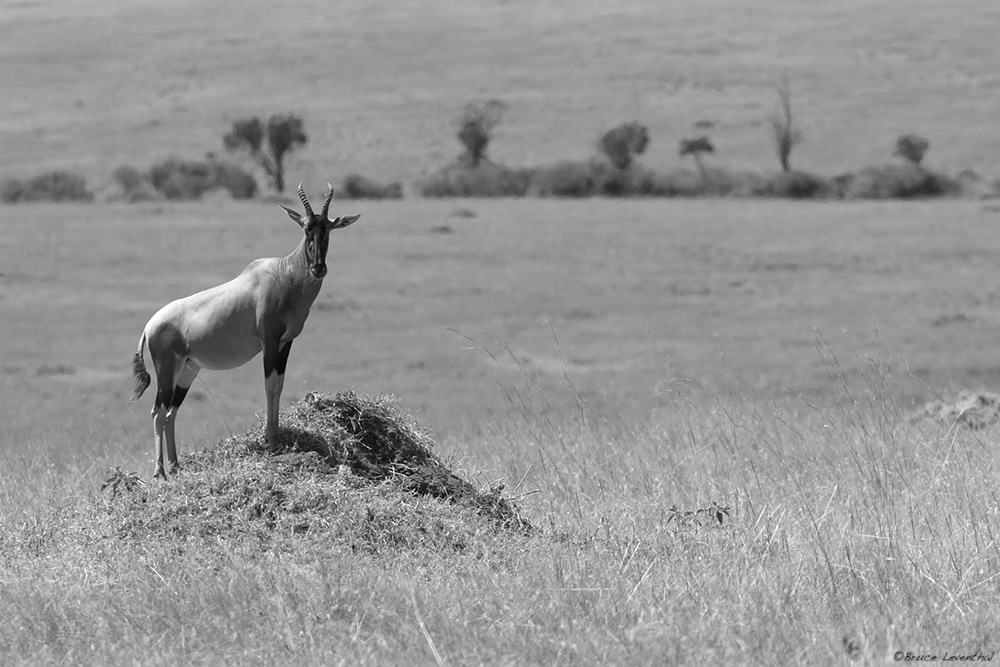
To emphasize the graphic character of the African fauna, I decided to process much of our work from the Mara in black and white. While dawn and dusk offer great opportunities to photograph wildlife in sweet warm tones, the midday is not so kind. In Africa, every minute off safari feels like a wasted opportunity. Realizing that this would probably be my last African safari for a number of years, I felt compelled to capture every moment... Although the light was often less than ideal, I knew that a strong composition and well balanced image could produce compelling photos when processed for black and white tones. In this series of pictures, my goal was to use black and white processing to emphasize the unique morphology that is so characteristic of African species.


©2000-2010 BTLeventhal.com / Bruce & Tamy Leventhal. All rights reserved. No image on this site may be used without permission

Wednesday, October 20, 2010

Kenya 2010: The Mara in Review (I)


It was a bit of a crap shoot, but I thought that my research would pay off. The event has been repeated for millennia as the wildebeest relive the tragedy of the commons. The seemingly infinite fields of Serengeti grasses are actually an ephemeral resource mowed to the roots by greedy grazers that nibble the foliage down to the soil. It was the end of June; the wildebeest should be on the move. The anticipation of seeing the great migration weighed on my every thought. I had visions of viewing nervous herds leaping into crocodile infested waters in a futile attempt to find a utopia on the Mara. 


Where were the wildebeest? We drove for hours as we made our way towards the Tanzanian border. We traversed endless fields of tall grasses, and had infrequent encounters with wildlife. For two days we searched the Mara, but the great migration was not to be found. The wildebeest were coming, but not until their food was gone. We arrived too soon. From the Kenyan border we could see the herd beginning to grow, but it was not showtime. We waited for hours and revisited the "hotspots," but they were not ready to take the plunge. 


The wildebeest are coming, the wildebeest are coming... but we have to go.


©2000-2010 BTLeventhal.com / Bruce & Tamy Leventhal. All rights reserved. No image on this site may be used without permission

Sunday, October 10, 2010

Kenya 2010: The Last Stand


Francis whispered... “Hmm, that is the bad one.”  
He continued... “This guy does not like people... I don’t think he is going to move. We need to wait here.”
The sun was fading. We were on the tail end of a day-long game drive and were making our way towards a tented camp on the perimeter of the Mara. I was shooting a serene elephant-scape in some sweet light, but it was time to move on.  
This was another great elephant day. 
During midday, we photographed lonely bachelor males meandering across the savanna. While the harsh light was a challenge to expose, I knew that black and white processing would emphasize the character of their wrinkled skin pocked by sun dried clay and mud.
While we did not have a repeat performance of elephant babes playing tug with their trunks, we were fortunate to see families traversing the Mara’s rich fields and acacia forests. You just can’t see too many elephants... there is something about the massive bodies, expressive eyes, and tender interactions that captivate the imagination. 
But now,... we were face to face with the “Bad One.” 
Armed rangers, charged with protecting the park’s inhabitants, were now between us and it. Francis whispered again, “That one will tip their truck... he does not like the Rangers.” The elephant moved closer, and the Rangers threw their car in reverse. The truck ran scared as the Rangers violated their own rules, rules that would cost Francis his license if he were to follow. The park vehicle moved off the road, drove along the riverbed and made a wide turn around the approaching pachyderm. They were safe... we were not. 
The monster seemed to be a caricature of himself... a giant bully with a torn ear, massive head, and a nasty disposition. Was it minutes or hours, I’m not sure... but we waited as he stared, approached, and stared again. I could see that Francis was assessing our limited options... reverse..., traverse..., stand our ground... We stood our ground, and the monster continued it’s approach. 
We three,... Tamy, my mother, and I looked at each other. I could see the thought cloud billowing above our collective heads... Now What?... What good are those Rangers?... The elephant walked closer. 
We were within ten meters of each other when Francis shifted the truck in reverse. He eased the vehicle back... we gave ground... we said “uncle.” The bully understood; he won and he knew it. Confident of his supremacy, the monster walked off the road and joined his family. Humbled by the power of the one, we drove off into the sunset and rejoiced in surviving this last stand. 

©2000-2010 BTLeventhal.com / Bruce & Tamy Leventhal. All rights reserved. No image on this site may be used without permission

Sunday, September 26, 2010

Kenya 2010: And They Descended from Dinosaurs


Now that summer has come and gone, I find that I spend the majority of my "free time" preparing lessons for my Advanced Placement Biology courses. You'd think that a guy with a B.S. in Ecology and Evolution, a Masters in Biology, and eighteen years of teaching experience would breeze through his lessons each day... nothing could be further from the truth. The A.P. Bio curriculum is so comprehensive, that I need to spend many hours a week studying, preparing and rewriting lessons. Sure I've taught this class for more than a decade, but look how much biology has changed in that time. 
Our knowledge of genes and genetics have been transformed as we've learned more about the genetic code. When I began my formal studies of biology in the 1980's, we described genes as discrete units that coded for specific proteins. We believed that humans were so complex, we assumed that our genome would be twice as large as a mouse. While we didn't know much about the mouse genome, scientists' believed that humans must have at least one-hundred thousand genes... this seemed like a big enough number. Biologist understood that genes had to be regulated... turned on and turned off, be we were clueless about the mechanism. 
Fast-forward thirty years... today we discuss the key regulatory sites on what were once called non-coding sequences of DNA, we've learned that epigenetics can result in short term inheritance of characteristics, and we now know that humans probably have fewer than thirty-thousand genes.
So what does all of this have to do with Kenya, Birds, and dinosaurs? Well having spent this weekend with my nose in books, thinking about metabolism, enzymes, and DNA, I couldn't help but recall a college lecture delivered by a stodgy old professor. We were studying patterns in evolution and comparative physiology when this prof said, "and you know, the dinosaurs didn't go extinct... today, we call them birds." This was the first time I heard the hypothesis and saw the anatomical evidence that changed the way I understood the connectedness between all living organisms on this planet. So, as I think about teaching my students about our current understanding of DNA and how it demonstrates the way life is intimately linked through billions of years of evolution, I offer you the opportunity to think about prehistoric times and the dinosaurs of our day. 
©2000-2010 BTLeventhal.com / Bruce & Tamy Leventhal. All rights reserved. No image on this site may be used without permission 

Sunday, September 12, 2010

Kenya 2010: Lake Naivasha and Crescent Island

"I had a farm in Africa at the foot of the Ngong Hills..."
So goes the opening line from Karen Blixen's memoir about her life in Kenya.
Made famous by Meryl Streep in the award winning movie "Out of Africa," Streep's Danish accent lingers in my head and reminds me of the racism that colonized East Africans were forced to endure. While Karen Blixen, might have been one the the "good ones," most Kenyans suffered the loss of their land and their culture under European oppression.
On December 12th, 1964 the Republic of Kenya was proclaimed to be an independent nation free of British colonial rule, and Jomo Kenyatta became the first president of the republic. Nearly fifty years later 67% of the Kenyan population voted to ratify a new constitution that redefined the Executive, Legislative, and Judicial branches of the government. The colony that once was, is no more... but its legacy continues to impact the populace today.
So, where does photography intersect with this geopolitical discourse? 
The past most definitely influences the present, and the actions of today determine what happens in the future. Traveling across Kenya from the arid north to its southern border with Tanzania, the influence of colonial rule was ever-present. Plantations still dot fertile mountain slopes, and while some of these farms are now the property of indigenous Kenyan families, others remain in the hands of a people who visited and never left. In Tanzania, the lyrical tones and inflections of Swahili ripple through the air, while the "King's English" seems to prevail in Nairobi and across the distant Kenyan countryside. 


The past has influenced the present, but it is not all bad. The European sensibility that embraces a natural landscape, is now an important part of the Kenyan psyche and culture. The Kenyan people recognize the importance and value of their wild resources, and they work to actively protect the landscape and participate the ecotourism that visitors travel so far to enjoy. 


Located at an altitude of 1,884m is Lake Naivasha. This freshwater lake has a surface area of nearly 140km², and is an important aquatic ecosystem that supports a diverse array of avian and mammalian fauna. Over 400 species of birds have been reported in this Rift Valley Lake and it is a great place to enjoy a boat safari. Our captain piloted our questionably seaworthy skiff with ease as he maneuvered us near nests, fish eagles, and groups of hippopotami. Having the opportunity to see and photograph these unique species at eye level from the water was an unexpected treat.
Located at the southeast edge of Lake Naivasha is Crescent Island. More accurately described as a peninsula, Crescent Islands juts into the lake and offers photographers the opportunity to participate in a walking safari. This island is home to zebra, giraffe, bushbuck, impala, waterbuck, gnu and numerous other prey species. The island lacks predators, so it is easy to navigate within and among animals that are normally quite wary of us. As we walked in and among these exotic giants our guide explained that Meryl Streep and Robert Redford were here. You see, it turns out that Karen Blixen's life, made famous by the movie "Out of Africa," was filmed on Crescent Island. This little peninsula within a Rift Valley lake is now a game sanctuary, that serves to protect Kenya's wild heritage that its people fought to reclaim.
©2000-2010 BTLeventhal.com / Bruce & Tamy Leventhal. All rights reserved. No image on this site may be used without permission