Showing posts with label culture. Show all posts

Thursday, September 1, 2011

Juxtaposition (III)

Before the Rush - Piazza San Marco, VeniceCanon 5D + 24-105L IS @ 24mm

Venice is a Mecca for the street photographer. Being a guy who's a bit more comfortable among a swarm of mosquitos than a day at the State Fair, I was a bit out of my element. As a way to stay within the comfort zone, I woke up early and pursued the quieter moments. While I tried to remain unobtrusive, I am not a voyeur of human behavior. Rather, I played my familiar role of an ecologist. I studied the changing light reflected against ancient facades and the way it scattered to warm the buildings that surround dingy canals. I warily watched for people and tried to understand their patterns as they lived their lives among the throngs of tourists that visit the fabled city each day. The triplet of images is my juxtaposition of time, angles and lines; it is the way I like to remember Venice.
Canal Express - Venice, Italy
Canon 5D + 24-105L IS @ 45mm
On the Mobile - Venice, Italy
Canon 5D + 24-105L IS @ 105mm
©2000-2011 BTLeventhal.com / Bruce & Tamy Leventhal. All rights reserved. No image on this site may be used without permission.

Monday, August 29, 2011

Juxtaposition (II)

The Future of Nairobi
Canon 40D + 100mm f2.8 USM
Both "Tension" and "Juxtaposition (1)" illustrate how an image series can be used to convey a story or theme. To me, "Tension" is a drama. The interaction of predator and prey are juxtaposed with the unpredictability of nature. Weather defines the ecosystem with its predictable patterns, yet it can be a foil to the animals that must endure it.


"Juxtaposition (1)" plays with both language and imagery. Here, the first three images are about a day in the life of a tropical species. This icon of Costa Rica always brings a smile to my face and those who have a chance to see them. Similarly, the elk portrayed are whimsical to me. The young bull filled with forage contrasts with the unique form of mature hind quarters. From my perspective, this juxtaposition is just funny.


Today, I offer a single image for Juxtaposition number 2. I will let you draw your own conclusions about how juxtaposition defines this story. 
©2000-2011 BTLeventhal.com / Bruce & Tamy Leventhal. All rights reserved. No image on this site may be used without permission.

Thursday, March 10, 2011

An Extension of the Mind and Eye

My cameras are an extension of my mind and eyes. They keep me engaged with the present and allow me to explore the hidden details of my life. Regardless of my path, I am forever seeking new ways to interpret the natural and human ecology of my landscape. To me, photography is so much more than an avocation. This passion for capturing milliseconds in time is my purpose. As an empiricist, I am the technician. I obsess about composition, exposure and point of focus. As an artist, I release myself from the confines dictated by the empiricist. I will purposefully defocus an image, blow-out highlights, and abandon the accepted rules of composition. 


Sunday, September 12, 2010

Kenya 2010: Lake Naivasha and Crescent Island

"I had a farm in Africa at the foot of the Ngong Hills..."
So goes the opening line from Karen Blixen's memoir about her life in Kenya.
Made famous by Meryl Streep in the award winning movie "Out of Africa," Streep's Danish accent lingers in my head and reminds me of the racism that colonized East Africans were forced to endure. While Karen Blixen, might have been one the the "good ones," most Kenyans suffered the loss of their land and their culture under European oppression.
On December 12th, 1964 the Republic of Kenya was proclaimed to be an independent nation free of British colonial rule, and Jomo Kenyatta became the first president of the republic. Nearly fifty years later 67% of the Kenyan population voted to ratify a new constitution that redefined the Executive, Legislative, and Judicial branches of the government. The colony that once was, is no more... but its legacy continues to impact the populace today.
So, where does photography intersect with this geopolitical discourse? 
The past most definitely influences the present, and the actions of today determine what happens in the future. Traveling across Kenya from the arid north to its southern border with Tanzania, the influence of colonial rule was ever-present. Plantations still dot fertile mountain slopes, and while some of these farms are now the property of indigenous Kenyan families, others remain in the hands of a people who visited and never left. In Tanzania, the lyrical tones and inflections of Swahili ripple through the air, while the "King's English" seems to prevail in Nairobi and across the distant Kenyan countryside. 


The past has influenced the present, but it is not all bad. The European sensibility that embraces a natural landscape, is now an important part of the Kenyan psyche and culture. The Kenyan people recognize the importance and value of their wild resources, and they work to actively protect the landscape and participate the ecotourism that visitors travel so far to enjoy. 


Located at an altitude of 1,884m is Lake Naivasha. This freshwater lake has a surface area of nearly 140km², and is an important aquatic ecosystem that supports a diverse array of avian and mammalian fauna. Over 400 species of birds have been reported in this Rift Valley Lake and it is a great place to enjoy a boat safari. Our captain piloted our questionably seaworthy skiff with ease as he maneuvered us near nests, fish eagles, and groups of hippopotami. Having the opportunity to see and photograph these unique species at eye level from the water was an unexpected treat.
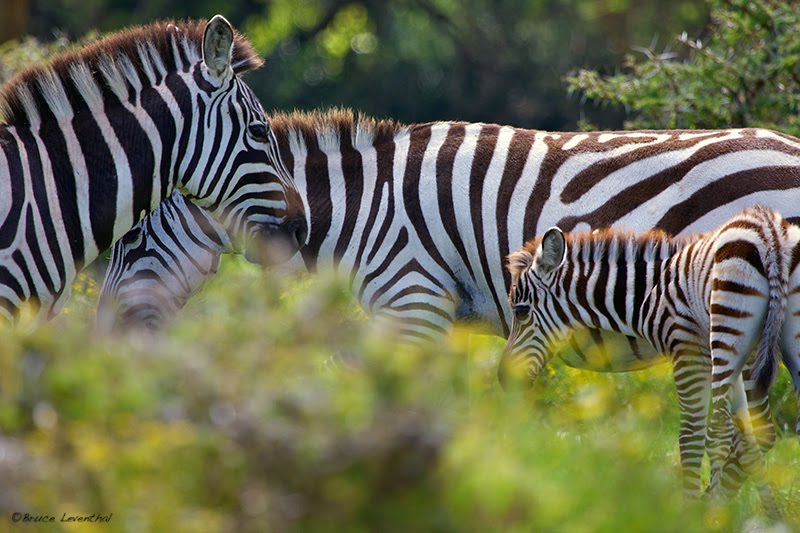
Located at the southeast edge of Lake Naivasha is Crescent Island. More accurately described as a peninsula, Crescent Islands juts into the lake and offers photographers the opportunity to participate in a walking safari. This island is home to zebra, giraffe, bushbuck, impala, waterbuck, gnu and numerous other prey species. The island lacks predators, so it is easy to navigate within and among animals that are normally quite wary of us. As we walked in and among these exotic giants our guide explained that Meryl Streep and Robert Redford were here. You see, it turns out that Karen Blixen's life, made famous by the movie "Out of Africa," was filmed on Crescent Island. This little peninsula within a Rift Valley lake is now a game sanctuary, that serves to protect Kenya's wild heritage that its people fought to reclaim.
©2000-2010 BTLeventhal.com / Bruce & Tamy Leventhal. All rights reserved. No image on this site may be used without permission 

Friday, September 3, 2010

Kenya 2010: Seeing with Intuition


Whenever intuition intersects with cognition, my photographic productivity suffers. 
I am drawn towards nature because I feel it, think it, and understand it. The complexities inherent in the natural world are not complexities to me; they are models based on interactions that coincide with my world view. To me, the patterns I observe in nature make sense, are logical, and form the basis in which I understand the world. To me, nature is intuitive. Because I have both an emotional and intellectual connection with the natural world, I see patterns and light in the environment in ways that I do not see anywhere else. This is why I am drawn to nature photography.


In contrast, when I over think the photographic process, I lose my ability to see. 
Photographers often claim to pre-visualize an image prior to shooting, and this is a skill on which I depend. However, this is not a cognitive exercise, it is intuitive... I am there, I feel my surrounding, and I know my goal. When I leave my comfort zone, my reflexive ability to see and to be in the moment dissipates. On these occasions my photography must evolve or it suffers. 
Here in lies the great challenge. I love to travel, explore our world, and interact with an environment that defines "the place." However, as soon as that place is defined by its human inhabitants, I lose my vision. It's not an irrational fear of humans, it's my discomfort with the voyeur in us all.
Voyeur... watcher... describer... interpreter... 
I do not like to be watched, nor do I want others to define me, yet this is what we do when we travel. We see their lives in their place and try to make sense of how they live. And I, with my camera, am the voyeur... the watcher... the describer... the interpreter. 
To some, the ability to mingle among our own is a source of comfort. These gifted photographers can wander through a crowd, relax their subjects and elicit a smile or capture that magic moment. This is their comfort zone, and when they are in the zone,... their photography is not cognitive... it is intuitive.
Today's images are of the Samburu people, and they are the indigenous inhabitants of Northern Kenya. The Samburu are a lesser known ethnic group whose connections point back to the Masai. Like their relatives to the south, the Samburu are semi-nomadic shepherds. Cattle is their currency, their measure of wealth, and their livelihood. These proud warriors wander among the lions, live off the land, and survive unimaginable hardships. The day we visited these people we learned about the drought, the collapse of their economy, and the challenges of their lives. 
I could not escape that feeling that haunts me when I travel among other humans... How can they be so happy when they have so little? I try not to be the voyeur, the watcher, the interpreter... I try to live in the moment, but I can't escape from my thoughts... they have so little and I have so much. I was not in the moment, I was thinking too much. In contrast, Tamy was there... she was in that intuitive place; you can see it in the girl's eyes above and the smirk below. My images are compelling, but I do not have what it takes to produce the image you see below. I am lucky to have a partner who can mingle among our own... I think I'll stick with nature.
©2000-2010 BTLeventhal.com / Bruce & Tamy Leventhal. All rights reserved. No image on this site may be used without permission

Wednesday, August 18, 2010

Kenya 2010: Published in Strange Places


Prudent Advice
Ok, well this really isn't a post about our summer safari to Kenya, but it is tangentially related. Shortly after the birth of my adorably cute niece, my sister Jaime began to author some "lessons of questionable importance" that she hoped to share with her daughter. It was a frenzied creative process where she would write quips about life, living, future, family and fun. However, this is not a list of trite thoughts that we have all heard time and again. Rather, this is a collection of musings defined by honest insight, tough love, realism and, yes, dreams. This little personal project blossomed into a blog that spidered across the internet. The blog became the seed for the book, "Prudent Advice," and a DIY website for parents and kids called "PrudentBaby.com."
Prudent Baby.com
It's really funny how one little idea intended to enrich a mother-daughter relationship blossomed into something so rich and engaging. 


So, where do Tamy and I fit into this elaborate and seemingly unrelated web about parenting? 
Knowing how concerned Tamy and I were about environmental, social and cultural issues, Jaime asked if we had any thoughts or images that we would like to share with her daughter. While I can be quite verbose, the thoughts did not flow, but the images did. We sent a few pictures from our travels, and Jaime seemed to connect with this group of Masai ladies adorned in their traditional clothes and jewelry. 


Pensive Masai Warrior
Ngorongoro Crater, Tanzania
Canon 1DmkII & 300mm f2.8IS
We are quite pleased with the words about travel (Advice 415) that support are image and love the way the work is displayed in the book. 


Prudent Advice is now available for pre-order on Amazon.com, and is the ideal gift for new mothers, baby showers, or someone looking for way to tell a daughter that she is loved. 


One final point... and a shameless plug for the The Way We See It... please visit our link to prudentbaby.com where we offered 25 Tips for Taking Great Photographs... you just might get a few new ideas!


©2000-2010 BTLeventhal.com / Bruce & Tamy Leventhal. All rights reserved. No image on this site may be used without permission

Prudent Advice, © 2010, Jaime Morrison Curtis
Prudent Baby, © 2010, Property of Jacinda and Jaime

Friday, July 16, 2010

Kenya 2010: An Elephant Story


Is there a place for photographs in this age of the web, instant video, and live streaming?

The ongoing disaster in the Gulf of Mexico reminds us that a moment in time, captured as a photograph, continues to have power and can invoke unanticipated emotion. While we all can watch the oil spewing from a severed pipe and imagine the consequences of this type of negligence, it is a photograph of the beached whale, oiled bird, or devastated person that ensnares our heart and mind.

There is power in the hidden story behind every still image. Rather than seeing what happens, the still requires us, the viewer, to invent the past and predict the future. This type of unknown makes for a mystery that our human brains are compelled to ponder. It is this unknown that makes pictures so captivating and thought provoking.


While life may be stranger than fiction, every picture tells a story that is narrated by the imagination in each of us. This story is defined by an untold past and an uncertain future. It is a story that is defined by the viewer, a mystery that continues to empower the still image in this post-modern age.


All of these images were taken at the David Sheldrick Wildlife Trust and Elephant Orphanage in Nairobi Kenya. The David Sheldrick Trust rescues baby elephants whose mothers were poached. The elephant keepers are a devoted lot. They sleep with the orphans, feed them, and teach the babies how to forage in their natural habitats. After three years of intense care and training, the elephants are released into national parks where they will form their own herd or join an pre-existing group. The orphans are tracked throughout their lives and have been known to recognize and greet their foster parents (the keepers) many years following their release into the wild. 

You can learn more about the Elephant Orphanage and contribute to their cause by visiting them in Nairobi, Kenya or on online at: www.sheldrickwildlifetrust.org


©2000-2010 BTLeventhal.com / Bruce & Tamy Leventhal. All rights reserved. No image on this site may be used without permission

Wednesday, June 18, 2008

Tanzania 2008: The Cradle of Humanity


It's difficult to know if the African ash will ever come off, and as far as I can tell, I am now a slightly darker shade of gray. Although I managed to spend a good twenty minutes in the shower last evening, the clouds of burnt carbon made aloft by our feverish drive to the cheetah feels as if it has bored into the pores on my face, hands and arms. Blackness is discharged when I blow my nose, and Q-tips are the color of charcoal whenever I attempt to clean my ears. Regardless of the permanence of my newly acquired dirt, the experience of pursuing a cheetah and lioness on her prey was priceless (lookout MasterCard).  

Sleep comes easy on the savannah. I think that I was engaged in a battle with a giant stick insect (order Phasmatodea) when my alarm abruptly ended the dream. Yesterday evening was our last night on the Serengeti, and today we head east towards Ngorongoro Crater. After spending six nights and seven days in Serengeti National Park, I am already working on a plan to visit this special place again. There is some intangible characteristic of Africa, specifically Tanzania, for which words cannot describe. I feel my own biological connection to this place and can visualize how natural selection has shaped the evolution of these animals and this ecosystem. The feeling of connectedness is so strong that I see myself, and the origin of our species, wherever I look.  

We had to be out of Serengeti National Park by 11:30 a.m. or face a fine for a delayed departure. The parks in Tanzania do not receive funding from the government; they obtain all of their revenue from tourism. As such, fees and fines can often be exorbitant.  

As we moved from the Serengeti into the Ngorongoro Conservation Area the grassland gave way to desert. The forested rivers and abundant grasses were replaced by a sparsely covered landscape. Much like driving through the Mojave Desert, this was a trip into infinity. I was contemplating desert survival strategies as my eyes wandered from mirage to mirage. Time passed as I imagined the challenges of survival in such an inhospitable place. When our caravan made the abrupt right turn into the desert, I was vaulted back into the present. Looking around, I realized that we were not driving on a road. Traveling nearly 80 km/h, sand and dust swirled in our wake. We were all clueless  about our destination as we traveled further into the desert. In the distance I could barely make out tow distinct spots. One looked like a bush, the other was a red dot. It took fifteen minutes, but we eventually passed two lean men dressed in red blankets. They each carried a long stick and walked into the infinity with their herd of cattle. We were not to visit the red dots just yet; this was a trip to the bush. Ten minutes later, the bush grew into a giant acacia. Our Land Cruisers parked to block the wind and we began the "Michael Show" once again... We were feasting under the ONE tree.

By 2:00 p.m. we piled ourselves into the trucks and continued our off-road journey. It's hard to describe how the desert here is different from the desert there, but something must be different. This desert, that we are now approaching, is a home.  

As soon as we disembarked from the Land Cruisers, the chanting began. The sound emanating from the Masai was deep and guttural. The circle tightened around our group as these tall lean men bellowed. Each Masai warrior wore a colorful shuka (blanket) and carried a long pointed spear. As fast as it began the chanting stopped and one man stepped into our circle. He towered over us and, to my surprise, began to speak English. Our interpreter was educated, lived an urban life, but wanted to return to his culture. The Masai are semi-nomadic pastoralists, live in stick and mud huts (boma), and take whatever the land has to offer. Cattle are their currency, their food, and their bank account. To marry a man must have cows. While goats are slaughtered for meat, the blood of cattle is mixed with milk to make an iron and protein rich pudding. The men herd their cattle each day and travel more than 20 km to pasture and water the animals. The women farm and collect food from the environment. Each evening the cattle are returned to the encircled village where they are protected from nocturnal predators.  

©2000-2010 BTLeventhal.com / Bruce & Tamy Leventhal. All rights reserved. No image on this site may be used without permission

Wednesday, June 11, 2008

Tanzania 2008: Waking up in Africa


Champagne and chef-prepared omelets were waiting for us when we arrived at the Dik Dik Hotel, Arusha. It was dark, but we could tell that this place was beautiful. After dinner we meandered to our little bungalow by a babbling stream. The overwhelming fatigue of our travel day was moderated by the sight of a net enclosed king-size bed dressed with overstuffed feather comforters. Our room was decorated in "Modern Warthog (gidi in Swahili)." So here I sit... the next morning... we are not disappointed. Surrounded by African botanical gardens, warm tropical light, and the songs of exotic birds, the Dik Dik Hotel is a very happy dream.  

We enjoyed a late breakfast of cheese, eggs, pastry (watch out cholesterol) and fine Tanzanian coffee on the outdoor patio surrounded by gardens. This was our first opportunity to chat with our fellow travelers on the photo safari. As Tamy and I downed cup after cup of coffee, we began to realize that we might be the "out-group" among the clan. As a high school teacher, I often feel old when working with adolescents ever day, today... I feel young! It appears that we may be a generation or two younger that our travel companions, and the breakfast discussion about social security might be 20 years premature for either of us. Nonetheless, all of the people we met today shared an enthusiasm for nature, wildlife and photography... we can relate to this!

After wandering the wonderfully manicured grounds of the Dik Dik, Tamy and I were anxious to see some of the "real" Africa. Sure the Dik Dik was beautiful, but this is a pre-staging respite for Kilimanjaro treks and Serengeti safaris. We know about tourists... hell, we're tourists... we are in Africa now and want to visit people who live and work in here every day.

Fortunately, we were introduced to Oswaldii who offered to take us into the village that surrounded the Dik Dik Hotel. Leaving the gated entrance of the hotel, we began to catch a glimpse of life "outside." Ladies in colorful clothes carried buckets, baskets, or wood on their heads and men draped in blankets or riding bikes hauled thatch, food and scrap up or down the road. We turned left and hiked uphill on an unpaved rough dirt road.

As we walked, people drifted by us. Every once in a while a person would wave, smile, and exclaim "jambo!" Jambo!... Hi, Hello, How's it going? Jambo! is the universal greeting in Swahili. We walked passed a group of young kindergarten-aged kids in school. They stopped in their tracks just in time to give us a good stare... we looked back and exclaimed "Jambo!" Jambo... jambo... jambo... this was the chorus for us as we continued to hike throughout the village.

Oswaldii showed us some of the crops grown in and around the village. He pointed out the coffee plants growing in the shade of bananas, trees busting with avocados, and wispy palm-like papayas towering over banana plantations. We got a quick lesson on how to distinguish maize from corn and how to prepare each for a good African meal.

Somewhere during the hike we made a left and found ourselves on a wooden bridge crossing a small river. It was on the bridge that we got our first glimpse of the black and white colobus monkeys. Oswaldii shushed us and pointed into the trees. Their black faces were rimmed by thick white fur that extended to a thicker black coat. The body terminated in a flamboyantly fluffy white tail. A giant tree skunk with a primate's face and hands. Of course we tried to photograph the monkeys, but they were gone before we had any real chance of taking a picture.

After another failed attempt at some photography we continued our walk across the bridge and hiked left up a hill. From here we could see the river water flowing into a concrete building. We were escorted into the open-air building which was filled with the stench of fish or fish food. We were in a trout fishery. This cleverly designed building is a hatchery for Washington state species of trout that is exclusively farmed by this village. This fish farm is a primary source of trout for villages and hotels throughout Tanzania.  

After a quick lesson in fish husbandry, we were back on the trail. Neither of us are certain about how it occurred, but a few lefts and rights later... and were back at the Dik Dik.

©2000-2010 BTLeventhal.com / Bruce & Tamy Leventhal. All rights reserved. No image on this site may be used without permission