Showing posts with label tips. Show all posts

Saturday, August 17, 2013

5 Simple Things You Can Do to Improve Your Landscape Photographs

St. Croix River Sunrise - Summer 2013, Stillwater MN
Canon 5D Mark iii + 17-40mm L @ 18mm w/ 6-stop Tiffen Variable ND Filter


Call this one a tweener... a little something from home in between our Costa Rica 2013 recap.
  • Use a tripod to increase stability, slow you down and permit long exposures.
  • Wake up early, be on site before sunrise and shoot the pre-dawn light.
  • Use a strong foreground element like a rock, tree or color to add balance to the image.
  • Use lines to lead your viewer’s eye into the photograph.
  • Try to expose in a way that stretches your histogram from the brightest whites (at the right) to the darkest blacks (at the left). This offers you the greatest flexibility when post processing. If the exposure range is greater than five stops between the extremes, then shoot multiple images at various exposures. By capturing a bracketed series you can merge the divergent exposures in software like Photoshop, Photomatix, or Nik HDR Effex. 
St. Croix River Sunrise (#2) - Summer 2013, Stillwater MN
Canon 5D Mark iii + 17-40mm L @ 18mm w/ 6-stop Tiffen Variable ND Filter
These pictures were taken on August 13, 2013 @ 6:10 a.m. Each was from a single exposure where I worked to maximize the dynamic range prior to and after image capture. The photographs were pre-processed in Aperture 3.4.5 and finished for presentation in Photoshop CS 5. 

©2000-2013 BTLeventhal.com / Bruce & Tamy Leventhal. All rights reserved. No image on this site may be used without permission.

Sunday, August 11, 2013

Costa Rica 2013 - Painting with Light

Light Painting with Frogs (Agalychnis callidryas) - Selva Verde, Costa Rica
Canon 7D + Canon 100-400L IS @ 400mm
Exposure: ISO 200 : 6 seconds : f5.6
Used as a way to illuminate foregrounds without flash, light painting adds texture and dimension to star photography and nighttime portraiture. Less commonly applied to wildlife subjects, nocturnal animals are typically photographed with flash traps. While this technique can freeze the motion of an animal on the prowl, subjects caught in a trap often appear startled and unnatural. Additionally, because camera traps are challenging to focus, it’s important use small apertures that will increase the depth of field. The reliance on this technique results in pictures that seem to be littered by branches that reflect the cold and sterile light produced by a flash. 

While traveling through the tropics this July, we had the opportunity to do some light painting. Unlike the millisecond pop of a flash-trap, light painting relies on long exposures to soft light. To paint with light, you’ll need a friend or two to illuminate your nocturnal subject. To emulate the appearance of candle or firelight, we covered the bulbs of our dying flashlights with our hands and slowly moved the light near and around the frog. This type of light painting requires you to prefocus, and bump your iso to 400 or 800. I suggest that you use a stable tripod, mirror lock-up and a cable release in order to minimize camera movement. You’ll need to be prepared to experiment with duration of your shutter, take many pictures and stay up late! 

©2000-2013 BTLeventhal.com / Bruce & Tamy Leventhal. All rights reserved. No image on this site may be used without permission.

Thursday, June 27, 2013

Shooting the Prairie (I)

Road to Nowhere - Near Milan, MN
Canon 5D Mark iii + Canon 17-40L
Often referred to as “flyover country” this nation’s midsection is a rare destination for travelers, adventurers and photographers. The Rockies, Sierras, and Appalachians compete with the coasts for nature enthusiasts, and should anyone be interested in visiting the middle, they are likely to search for a good fishing hole or forest trail. Unlike the allure of the African savanna, North America’s grasslands are the ignored step child to the ecotourist. 
Eye of the Storm - Lac Qui Parle State Park, MN
Canon 5D Mark iii + Canon 17-40L
Maybe it’s due to proximity or a nostalgic reflection on my research with monarch butterflies, but I seem to be drawn to the prairies of middle America. A frequent visitor to North and South Dakota’s Badlands and lover of road-trips to nowhere, I have been quietly documenting grassland species and landscapes between Minnesota and Montana. This unplanned personal project now represents a significant percent of my image-portfolio, and continues to be an important photographic subject. Representing less than three percent of its original distribution throughout the midwest, North America’s grasslands are an endangered ecosystem.
Old Barn - Near Milan, MN
Canon 5D Mark iii + Canon 17-40L
Photographing a sea of grass can be a challenge to the most accomplished photographer. More than any other location, the prairie requires a deliberate study of composition and light prior to squeezing the shutter. To make the mundane interesting, try to leverage the turbulent weather of spring and summer, the contrasting lines between habitat and farms, or the pastels of dawn and dusk in your photographs. To make the infinite intimate, seek converging lines and search for a focal point to anchor the viewer. 
Minnesota River Sunset - Lac Qui Parle State Park, MN
Canon 5D Mark iii + Canon 17-40L
The formula, (Being There + Serendipity = Art) has served me well in the past, however I can not claim that this accurately describes my efforts on the prairie. Here, repetition and forethought are essential components for generating compelling images. For each picture presented in this post, I scouted the location and planned to be present in the “right” light. While I doubt that any one image was truly previsualized, I knew that if I put myself in the right place at the right time, I’d increase the chance of making a keeper.  

©2000-2013 BTLeventhal.com / Bruce & Tamy Leventhal. All rights reserved. No image on this site may be used without permission.

Sunday, March 3, 2013

Fool Me Twice, Shame on Me!

River Otter (Lutra canadensis) - Minnesota
Canon 7D + 300mm f2.8L IS
I’m the guy who preaches, “get it right in camera!” 
I tell my students and friends to practice exposure theory, “know what the meter says,” and “add light to white.” Yet, when faced with a critical moment, fear of loss consumes my process and I find faith in technology.

I’m not a faith type of guy, so why does a logician suddenly find religion when knowledge and experience should suffice? Call it fear of failure, chicken shit or misplaced confidence, but when the chips are down, I tend to trust the meter. 
River Otter Pair (Lutra canadensis) - Minnesota
Canon 7D + 300mm f2.8L IS
Fool Me Twice, Shame on ME! Last week I blew a fleeting moment when I underexposed  a great-gray owl in twilight. I knew the meter would get it wrong, but I had faith... I was wrong! 
This morning I was at it again. As the sun slowly spilled over the horizon a pair river otters (Lutra canadensis) emerged from an ephemeral hole in the ice. Knowing their intolerance for people, I had less than five minutes to work. Should I trust the meter? Hell NO! Snow-covered lake ice will never be exposed correctly by a camera that interprets its world at 18% gray. Yet, the little voice in my head kept saying... “in five minutes they’ll be gone, trust your meter.” I shrugged off the doubt added light to white and overexposed the suggested “correct” exposure. Trepidation and fear of failure lost this round, while logic and experience ruled the day. 

©2000-2013 BTLeventhal.com / Bruce & Tamy Leventhal. All rights reserved. No image on this site may be used without permission.

Sunday, December 2, 2012

Tip #101: Fog, Smog and Overcast Light

Yellowstone National Park
Canon 5D mark ii + Canon 17-40mm f4L

You’ve traveled halfway around the world, woke up three hours before dawn and fought off cardiac arrest during your 6000 foot assent. What’s more, you broke the bank to take this trip and used all your vacation time just to capture an elusive target. Unfortunately, Murphy waved his ugly hand and the light is crap. Either the sun is too bright or you’re surrounded by a pervasive mist that will not go away. 
Lake Agnes - Banff National Park
Canon 5D mark ii + Canon 24mm f3.5L TSE
We’ve all been there and it’s these moments that test your patience and reward creativity. I have day job, so when I’m out on a shoot or traveling to photograph an ecosystem, I have to come back with something. It’s a cliche thing to say, but restrictions and limits feed my creative spirit. When faced with less than ideal shooting conditions, I put on my black and white goggles, study the landscape and look to play with tones and angles. During these less than ideal conditions, I work harder to define my story and be sure to pre-think the impact of every technical decision. Selecting the correct aperture, emphasizing shadows that define and choosing the right lens will be the difference between the images you cherish and those you can’t wait to forget. 
Icefields Parkway
Canon 40D + Canon 100-400 f4.5-5.6L IS
©2000-2012 BTLeventhal.com / Bruce & Tamy Leventhal. All rights reserved. No image on this site may be used without permission.

Sunday, November 25, 2012

Tip #100: Eat that Frog

Poison Dart (Dendrobates auratus) - Selva Verde, Costa Rica
Canon 40D + Canon 100 f2.8 Macro USM 
It’s your mountain of homework, bills that need to be paid or taxes you’ve neglected to file. Your frog is the ugly task you avoid each day, week, month and year. It is your anchor; a weight that drags you into the abyss. Your frog saps your creativity. It sits on your desk and croaks in your general direction. That frog needs to be eaten!
First Snow - Stillwater, MN
Canon 5D Mark ii + Canon 40mm f2.8 STM
Based on a book by Brian Tracy  and introduced to me via a podcast by Martin Bailey, the analogy really resonated with me. We all need to eat that frog now, because there will be two tomorrow and three the next day. It is important to recognize that we do the things we need to do so that we can do the things we want to do. If you eat that frog today, you’ll have more time for your craft tomorrow.  
Before First Snow - William Obrien State Park, MN
Canon 5D Mark ii + Canon 40mm f2.8 STM
Want to learn more about Brian Tracy’s book? Check out the link: http://www.youtube.com/watch?v=0W7GB5Fh2XM
Cope's Gray Tree Frog (Hyla chrysoscelis) - In the Garden, MN
Canon 5D Mark ii + Canon 100mm f2.8L IS Macro
©2000-2012 BTLeventhal.com / Bruce & Tamy Leventhal. All rights reserved. No image on this site may be used without permission.

Monday, November 19, 2012

Tip #99: Make the Connection

Jasper National Park - Canada
Canon 5D mkII + Canon 50mm f1.4

There are fleeting moments where time stops and the essence that is the photographer becomes one with the subject. These are ephemeral experiences, intense bursts of focus that I can only describe as Zen. It might seem a contradiction for this empiricist to describe an experience in nature that is something less than science, yet I find that Zen philosophy can inform my mind without imbuing a religious conviction.
Eddy - Canada
Canon 5D mkII + Canon 24mm TSE f3.5L
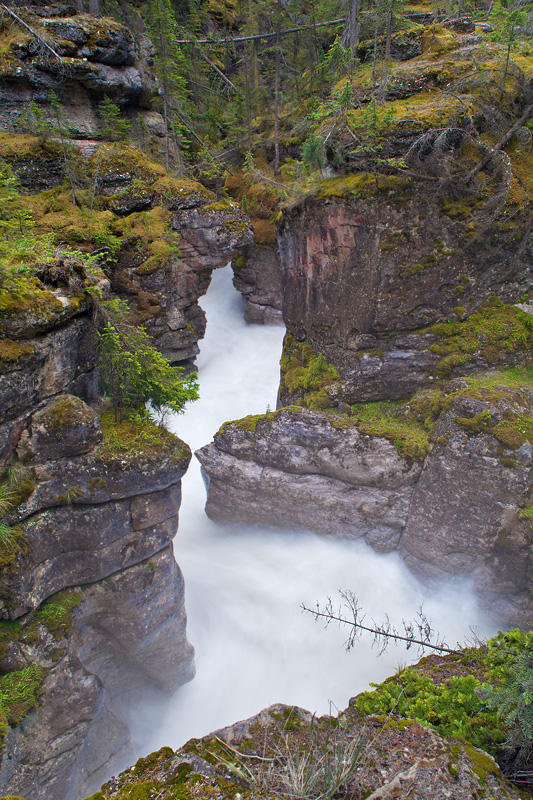
Slot - Canada
Canon 5D mkII + Canon 50mm f1.4
Id, the scientist... “life is a continuum that began with a single cell competing for limited resources, motivated by the programmed need to replicate. Competition inspired organic innovation that led to a branching tree of life that extends into every ecological niche. Selection is the mechanism, and chance events in the environment separate the winners from the losers. The evidence of this rich evolutionary history is written in molecules and preserved in stone.”
Nanny and Kidd (Oreamnos americanus) - Canada
Canon 7D + Canon 300mm f2.8L IS + 1.4x converter
Leading Lines (Oreamnos americanus) - Canada
Canon 40D + Canon 100-400mm f4.5-5.6L IS
Zen, the artist... “Reality seems sterile and non-emotive. Art is a human pursuit, a mode of self-expression, and Zen helps me to explore my place in nature. I am the ripple in a pond, a wave in the ocean, a drop of rain cycling through the atmosphere; I am one, a part of the continuum.”
Reflecting Jasper - Canada
Canon 5D mkII + Canon 50mm f1.4
We are the Rock (Oreamnos americanus) - Canada
Canon 7D + Canon 300mm f2.8L IS + 1.4x converter
Schizophrenic in the literal sense, photography is a split of the mind; it is art and it is science. White light emanates from solar fusion, reflects off an earthly mass and photons are captured by a Silica wafer. Transformed into a binary code, this is the picture. In contrast, a careful search for leading lines, colored abstractions and tonal gradients shape our art. Lost in the moment, the photographer is one with the place and sees what others will not. Whatever your mind, accept that you are a part of the nature that you seek to capture, and you will make art from the science that is our reality.

©2000-2012 BTLeventhal.com / Bruce & Tamy Leventhal. All rights reserved. No image on this site may be used without permission.

Thursday, November 8, 2012

Tip #98: Rule #6

Black Bear and Dandelions - Jasper National Park, Canada
Canon 7D + Canon 300 f2.8L IS @ f2.8
Are you a working photographer or a photographer who works? If the title matters, then you really need Rule #6. Regardless of your profession, love of the process and the adventure should be motivation enough. Block the inputs that promote self-doubt or diminish the sense of worth. When you can't embrace what you enjoy, it's time remember Rule #6. 
Rule #6
Don't Take Yourself So @#&! Seriously
A Grasshopper's Nightmare - Jasper National Park, Canada
Canon 7D + Canon 300 f2.8L IS @ f3.2
©2000-2012 BTLeventhal.com / Bruce & Tamy Leventhal. All rights reserved. No image on this site may be used without permission.

Wednesday, October 31, 2012

Tip #97: Keep a Level Head

In Flight (Grus canadensis) - Crex Meadows Wildlife Refuge, WI
Canon 7D + Canon 100-400L f4.5-5.6 IS
Bad puns deserve loud groans, but slanting horizons really drive me nuts. When film was king, photographers worked more purposefully because every image had a cost and laziness became lesson in economics. Sloppy technique at a pinnacle moment detracts from an otherwise perfect moment and causes your audience to question the laws of physics. I can't stand seeing birds and boats paddling up some fictitious aquatic hill. The cure for this ailment is a quick fix, and your choices are quite simple.

  1. Use a sturdy tripod, a quality head and a bubble (or in camera) level. Frame your landscape, step back for a moment to clear your preconceived vision, and give the image a second look. Find an anchor on which to level your horizon and only then make the shot.
  2. No time to level in camera, then level it during the post process edit. Every image editor has a leveling tool. While some are quicker than others, there is no excuse to share an image with a blown horizon. 
In photography, it is often said, you are judged by weakest image in your folio. Like bad grammar and the tendency to lie, blown horizons may define you to your audience in ways that will be hard to change.  
Before Sunrise - St. Croix River, MN
Canon 5D mark II + Canon 24mm f3.5L TSE

©2000-2012 BTLeventhal.com / Bruce & Tamy Leventhal. All rights reserved. No image on this site may be used without permission.

Wednesday, October 17, 2012

Tip #96: Instinct

After the Sun - Crex Meadows Wildlife Refuge, Wisconsin
Canon 5D Mark II + Canon 40mm f2.8 STM @ f11
Listen to the voices inside and follow your instinct. Be in the present, block the distractions and go where the light takes you. While any photographer can capture the reality in a moment, it takes an artist to convey the manifestation of a vision.  

©2000-2012 BTLeventhal.com / Bruce & Tamy Leventhal. All rights reserved. No image on this site may be used without permission.

Monday, October 8, 2012

Tip #95: It Might Be Your Only Chance

Steep Climb (Ovis canadensis)
Icefields Parkway - Canada
Canon 7D + Canon 300mm f2.8L IS
Is it half empty or half full? 
I won’t bore you with this tired cliche, but I do believe that the tension inherent in the question offers a photographer some pause for thought. Photography is fraught with compromise, especially when considering the stark contrasts that life has to offer. 
  • Should I expose for the shadow or for the highlight?
  • Do I select a slow shutter speed to convey the motion of a moment, or do I shoot it fast to stop the action?
  • Could a shallow depth of field isolate my subject, or would it be best to capture the infinite space of a landscape.
Salt Lick and Grit (Ovis canadensis)
Icefields Parkway - Canada
Canon 7D + Canon 300mm f2.8L IS
While I might lack a religious conviction, I am a Taoist photographer. I see balance in nature and seek to understand the contrasts inherent in this world. I see the yang at a peak moment, and the yin as the sun begins to set. Taoist accepts the contradiction between light and shadow and sees this as a part of the whole. 
Watch for Bighorn Sheep (Ovis canadensis)
Icefields Parkway - Canada
Canon 7D + Canon 300mm f2.8L IS
When you approach a novel subject do shoot as if you’ve reached diminishing returns or do you immerse yourself in the cornucopia of a limited opportunity. I suggest that you shoot as if every encounter might be your last, and you approach your subject from diverse perspectives. By accepting the contrasts inherent in nature, you make the most every every photographic opportunity.

About the Images: The posted photos are of Canadian bighorn sheep (Ovis canadensis)   captured along the Icefields Parkway and Kootenay National Park. We spent several hours with the sheep seeking to capture a diversity of perspectives and behavior.

©2000-2012 BTLeventhal.com / Bruce & Tamy Leventhal. All rights reserved. No image on this site may be used without permission.

Thursday, September 27, 2012

Tip #94: Don't Trust the LCD

Flight of the Dinosaur (Grus canadensis)
Canon 7D + Canon 300mm f2.8L IS @ f4.0
Shot in IS Mode 2 to optimize Sharpness while panning
That TV screen on the back of your camera is a great invention, but never use it to separate the winners from the losers. The details of distant objects will be blurred to nothingness, while subjects shot close will seem to be brilliant. In the end, you’ll be disappointment by your premature winners and surprised by the loser that you nearly trashed. While the LCD is a great tool for assessing composition and reviewing histograms, I suggest you leave your sharpness checks for quiet moments with Lightroom™ or Aperture™ on the “Big Screen.”
Crane Migration (Grus canadensis)
Canon 7D + Canon 300mm f2.8L IS @ f4.0
Shot in IS Mode 2 to optimize Sharpness while panning 
Shoot the Moon (Grus canadensis)
Canon 7D + Canon 300mm f2.8L IS @ f4.0
Shot in IS Mode 2 to optimize Sharpness while panning
I'm not a Pteradactyl (Grus canadensis)
Canon 7D + Canon 300mm f2.8L IS @ f4.0
Shot in IS Mode 2 to optimize Sharpness while panning
Landing Gear Down (Grus canadensis)
Canon 7D + Canon 300mm f2.8L IS @ f4.0
Shot in IS Mode 2 to optimize Sharpness while panning

About the Images
These are Sandhill Cranes (Grus canadensis) during the Fall migration. Crex Meadows Wildlife Refuge is an ephemeral stop to roost, fuel up on corn and reunite with old friends. The birds arrive as the sun begins to set, and they will roost through the night. At dawn and dusk the refuge echoes with the ruckus of these extant dinosaurs. They arrive at dusk in the thousands and exit the dawn with explosive burst of activity. 

Photographically, I am challenged by their flight that begins in the bright sky and terminates in the shadows of marsh. As throngs of birds glide over head, selecting “the one” often seems like an impossibility. They are the bombing raid that I imagine in my minds eye, and I am the gunner shooting for my own survival.

A check of the LCD always ends with disappointment and a feeling of failure. Each year I photograph these birds, believe something is wrong with my gear, and I swear in a way that embarrasses my own ears... and thus, a Photo Tip is born.

©2000-2012 BTLeventhal.com / Bruce & Tamy Leventhal. All rights reserved. No image on this site may be used without permission

Thursday, September 20, 2012

Tip #93: Edit Your Images Ruthlessly

Dispersing Dandelions - Kootenay National Park, British Columbia
(Ursus americanus)
Canon 7D + Canon 300mm f2.8L IS @ f3.2
The title says is all. Be an honest critic and divorce yourself from the experience. Save the almost's for a spouse or good friend and learn from your mistakes. Edit ruthlessly because poor pictures will detract the impact of your goods ones. 
Only show the world "the good stuff!"


©2000-2012 BTLeventhal.com / Bruce & Tamy Leventhal. All rights reserved. No image on this site may be used without permission.

Saturday, September 8, 2012

Tip #92: Balance

The River - Stillwater, MN
Canon 7D + Canon 300mm f2.8L IS
Simpler to say than articulate the way,... strive to produce a balanced image. One individual’s interpretation of balance will likely differ from another and this difference often defines a style. When given the opportunity, I visit the same place many times throughout a year. I try to view it from above and squat to get low. I look at light and shadow and study the way these change throughout the day. This is how I begin to define balance in my images. Maturity follows experience, and balance is a characteristic of the mature. 
Rock -kcoR
Canon 7D + Canon 300mm f2.8L IS
When seeking balance, consider the compositional elements in the frame and use these assets to lead your viewer into the picture. Tonal gradations, abrupt shifts in contrast and motion will also define your subject and convey a sense of balance. Balanced images suggest balance in nature and, to the optimist, balance in life.

©2000-2012 BTLeventhal.com / Bruce & Tamy Leventhal. All rights reserved. No image on this site may be used without permission.

Thursday, August 30, 2012

Tip #91: Tools (Part 3: The Landscape Lens)

Water in the Slot - Banff National Park, Canada
Canon 5D mark II + Canon 24mm f3.5L TSE
In tip #83 I describe the five key features I need in a camera, while tip #84 considers the essential characteristics of a wildlife lens. In this, my final gear post, I share my thoughts about selecting a lens for landscape photography.

In many ways choosing your lens for wildlife photography will be simpler than finding the “ideal” landscape optic. Animals adapt to environmental pressures with elusive behaviors, cryptic patterns and a healthy dose of fear. To produce wildlife images, we use telephoto lenses that will compress distant landscapes and isolate wary quarry from a cluttered environment. Ultimately the selection of a wildlife lens depends more on ones budget than the target you seek to photograph (see tip #84). Sadly, this calculus is not as easy when looking for the “perfect” landscape lens.

First, consider the vast array of subjects that reside within the landscape umbrella. Many landscape photographers seek to convey the essence of a place by capturing it all. These images imply the enormity of our world and can extend from toe to infinity. Here depth of field is king, as it is used to focus attention on strong foreground elements and the most distant details. 

Alternatively, some landscapes are defined by the minute patterns in an ecosystem or city. These can be images of fall leaves swirling in an ephemeral pool, waterfalls framed by mossy rocks, or surreal “lichenscapes” that might easily be confused with the Martian surface (go Curiosity!). Whatever the subject, landscape photographers are pattern seekers who claim a continuum from the microscopic to the macroscopic as their own. As such, it can be quite a challenge to select only one lens to meet this diverse need

Given the broad nature of the landscape genre, nearly any lens can be a suitable landscape optic. What follows are three strategies to consider prior to making another expensive purchase.

Ask Yourself... What is your primary Subject?
One Lens to Capture it All
When flexibility is your priority, consider investing in a wide-angle to normal or wide-angle to telephoto zoom. These lenses rely on clever optical designs that allow a shooter to capture both the expansive landscape and details of a micro-scape. I suggest that you look for a zoom lens with a fixed aperture and LD, ED, or APO glass elements. As with telephoto lenses, these specialized glass elements reduce blur by focusing the varying wavelengths of light (ie: ROYGBiV) at one point. In addition, consider finding a wide-angle zoom that employs aspherical optical elements. Aspherical lenses are engineered and ground to have a non-spherical (thus “aspherical”) lens to air surface. By including this specialized type of glass in a wide-angle, disturbing distortion is reduced and even eliminated. The addition of these specialized elements really improve the optical quality of zooms, which represent an engineering compromise in order to meet their zooming function. My favorite all purpose Canon zoom is the 24-105 f4.0L IS. This would make a great one lens kit for the generalist who wants to travel and shoot it all. For those using a camera with a full-frame sensor (Canon 5D-series, Canon 1Ds-series, Nikon D700-D800, D3x or D4) and hoping to specialize in traditional landscape subjects, consider purchasing a 17-40 f4L (Canon) or 16-35 f4-ED (Nikon). Those using cameras with APS-sized sensors (most other digital SLR’s) should look at lenses in the 10-24mm range. Nearly every lens manufacturer has a quality lens in this focal length. In fact, I’ve recently added the Tokina 12-24mm f4 ATX II to support our cropped 7D bodies, and have found this to be as good as any Canon super wide-angle zoom I’ve used or owned. 
Regardless of your choice, if you are seeking flexibility, include a wide-angle zoom in your bag.

Self Imposed Constraints for Creativity
While Tamy likes the flexibility of a zoom lens, I prefer to work with prime optics. In fact, in addition to my two camera bodies, I only carry three lenses with me in the field. In general, I attach a 300 f2.8L IS to a Canon 7D with its cropped APS-style sensor, and alternate my other two lenses on my Canon 5D mark II. The latter lenses are a 100mm f2.8L IS macro and a 24mm f3.5L TSE manual focus lens. I thrive on the constraints and minimalism of this simple system. While all of my the optics include apochromatic glass or aspherical elements that increase detail while reducing distortion, they do not zoom. Instead, I zoom with my feet, spend time studying my composition and work very slowly. The absence of the zoom is a self imposed constraint that forces me to process the entire shooting experience.

There is no one best landscape lens nor one best landscape shooting technique. We live with a cornucopia of options that facilitate infinite possibilities. Find a style, select a lens and make some images.

©2000-2012 BTLeventhal.com / Bruce & Tamy Leventhal. All rights reserved. No image on this site may be used without permission.

Wednesday, August 22, 2012

Tip #90: Wait for the Interaction

I'm the Boss, Got It! (Cervus Canadensis) - Jasper National Park, Canada
We watched a lazy elk herd for over an hour waiting for an Interaction
Canon 7D + Canon 300mm f2.8L IS
Sometimes is pays to wait it out. Patience and endurance are a key part of every wildlife photographer's toolkit. Give it time, and you just might transform a good photo op into a great one.
Meddling Mom! (Cervus Canadensis) - Jasper National Park, Canada
Canon 7D + Canon 300mm f2.8L IS

©2000-2012 BTLeventhal.com / Bruce & Tamy Leventhal. All rights reserved. No image on this site may be used without permission.

Wednesday, August 15, 2012

Tip #89: Look Harder

Sleeping House Boats - St. Croix River, MN
Canon 5D markII + 24mm f3.5 TSE
Building on my suggestions in tip #69... mine your home town. 
Patience and creativity can transform your boring home into a photographic treasure. Every time I leave the house, I stare at the light and study the way it scatters about and reflects the sky. I’m open to discovery and will readily shed the car’s armor to explore with my feet. It happened just yesterday while on a familiar road that I frequent regularly. I was driving, I stopped to photograph a tree and instead saw a staircase to the water. It was a new perspective of my river; it was a place I had visited but had never seen. 
In the Shadow of the Sun - St. Croix River, MN
Canon 5D markII + 24mm f3.5 TSE
It’s easy to become bored after traveling abroad or experiencing life on the road. Yet, there is so much to see at home if you’re open to creative thoughts and willing to look a little harder. 
Motored Waves - St. Croix River, MN
Canon 5D markII + 24mm f3.5 TSE

©2000-2012 BTLeventhal.com / Bruce & Tamy Leventhal. All rights reserved. No image on this site may be used without permission.

Saturday, August 11, 2012

Tip #88: Fill Flash

Goldfinch (Carduelis tristis) & Ruby-throated Hummingbird (Archilochus colubris)
Snake River Conservation Area - MN
Canon 7D + Canon 300mm f2.8L IS + Canon 320EX Flash


Caveat emptor... I am not an authority (or even a reliable source) on this topic. I love ambient light and will do nearly anything to avoid a flash. To be clear, I’m not anti-flash... I’m a flash ignoramus, a neophyte who lacks the hours of repetition that defines experience. Thus, I suggest you take my thoughts about flash with a bit of skepticism and consult the following links to inform your flash technique: 
Balanced fill flash, when applied properly, can produce natural images that appear as if they were made in ambient light. Small birds are an ideal subject for a bit of artificial light; a little pop of flash will define feathers, illuminate eyes and add dimensionality to an otherwise flat image. My fill-flash technique works best when the subject is in shadow and at a distance from its background. To consistently produce nice images under these conditions, I do the following:
  1. Set the aperture near its maximum (in the posted shot I set the lens to f3.2)
  2. Select the corresponding shutter speed that will allow you to produce a natural and “correct (see prior blog post about correct exposures)” exposure. When photographing fast and unpredictable subjects, strive to shoot at 1/100 second or faster (in the posted shot I set the shutter to 1/200 second).
  3. Use an off-camera flash cord, radio trigger or infrared trigger to move the flash off the body. Long lenses and their hoods will obstruct the flash and create a distracting shadow. Additionally, images produced with on-camera flash often appear flat. By moving the flash off the camera, you can add light from an oblique angle and thus control the shadows.
  4. Set your flash to E-TTL (Canon), i-TTL (NIkon), or P-TTL (Sony). These are the “smart” flash settings that rely on the in-camera computer to balance the output of your flash with the subject, exposure and focus.
  5. Final Key Step... you must reduce the output of the flash by 1/3 to 2/3 stops (-1/3 to -2/3). With some cameras you set flash exposure compensation in the camera while other systems require that you do this on the flash. By reducing the output of the flash, the burst of light will only fill some shadows and add a highlight to the eyes. The retention of these shadows adds detail and dimensionality to the image without overpowering the ambient light.
Give it a try and good luck as you begin to use fill flash where natural light won’t cut it. 

©2000-2012 BTLeventhal.com / Bruce & Tamy Leventhal. All rights reserved. No image on this site may be used without permission.

Sunday, July 29, 2012

Tip #86: Make it Your Icon

Canoes on Lake Louise - Banff National Park, Canada
Canon 5D MarkII + Canon 50mm f1.4 @ f16

We amateurs, lovers of photography, need not feel intimidated by the millions who have preceded us. We travel to experience life and we shoot to practice our craft. It is inevitable that our journeys will cross paths where masters of the art have walked before; icons become icons because they did it first. This knowledge can be paralytic or liberating, the choice is yours. 
Here are a few ways that I approach iconic destinations...
  • I study the history and culture of the place, not the images others have made. Prior work corrupts my vision and restricts my creativity. I choose to be surprised by the unexpected rather than disappointed by the assumed.
  • Every time is the right time. I will visit before sunrise and shoot through twilight. Inclement weather and overcast skies are my friends. It is during the extremes that I have the opportunity to see and make something unique.
  • I play with my composition, my point of view and my depth of field. I strive to be excited by the experience and convey the excitement with my work. 
  • I think about the print that I will make or the post for my blog. This gives me a purpose for my deliberate process. 
Don’t be intimidated by all of the great photographers in the past, as there are many who are even better in the present. Shoot for yourself and make each icon your own.

©2000-2012 BTLeventhal.com / Bruce & Tamy Leventhal. All rights reserved. No image on this site may be used without permission.